
Blizzard finally brought the fight to your pocket. After years of speculation and demand from the mobile gaming community, Overwatch Mobile launched in 2026 as a full-featured, free-to-play experience designed specifically for smartphones and tablets. This isn’t a stripped-down port or a cynical cash grab, it’s a genuine attempt to bring Overwatch’s team-based, hero-driven gameplay to a platform where millions of players were waiting. Whether you’ve been grinding Overwatch on PC since beta or you’re picking up a hero shooter for the first time, this guide covers everything you need to know about Overwatch Mobile: what makes it different, how to get started, and what to expect from the mobile esports scene that’s already heating up in 2026.
Table of Contents
ToggleKey Takeaways
- Overwatch Mobile launched in March 2026 as a full-featured, free-to-play hero shooter designed for iOS and Android with 25 heroes, independent progression, and a separate competitive ranking system.
- Mobile-optimized controls use touchscreen aiming combined with gyro input, intuitive ability placement for thumb access, and streamlined UI, making the game accessible without sacrificing strategic depth.
- Overwatch Mobile requires no payment to be competitive; cosmetics are purely cosmetic with no gameplay advantages, and heroes are unlocked through gameplay rather than paywalls.
- The emerging esports scene for Overwatch Mobile already features six-figure prize pools, major esports organizations, and an international championship planned for Q4 2026 with expected prize pools exceeding $5 million.
- New players should master one or two heroes first, study map knowledge and positioning fundamentals, and understand ability cooldown management before progressing to competitive ranked play at account level 25.
- Cross-progression enabling cosmetics to transfer between Overwatch Mobile and Overwatch 2 is coming in Q2 2026, though progress and ranking systems remain separate across platforms.
What Is Overwatch Mobile?
Overwatch Mobile is Blizzard’s dedicated mobile adaptation of the flagship hero shooter, designed from the ground up for iOS and Android devices. Released in March 2026, it’s not a mobile version of Overwatch 2, it’s a parallel experience with its own identity, progression system, and balance philosophy.
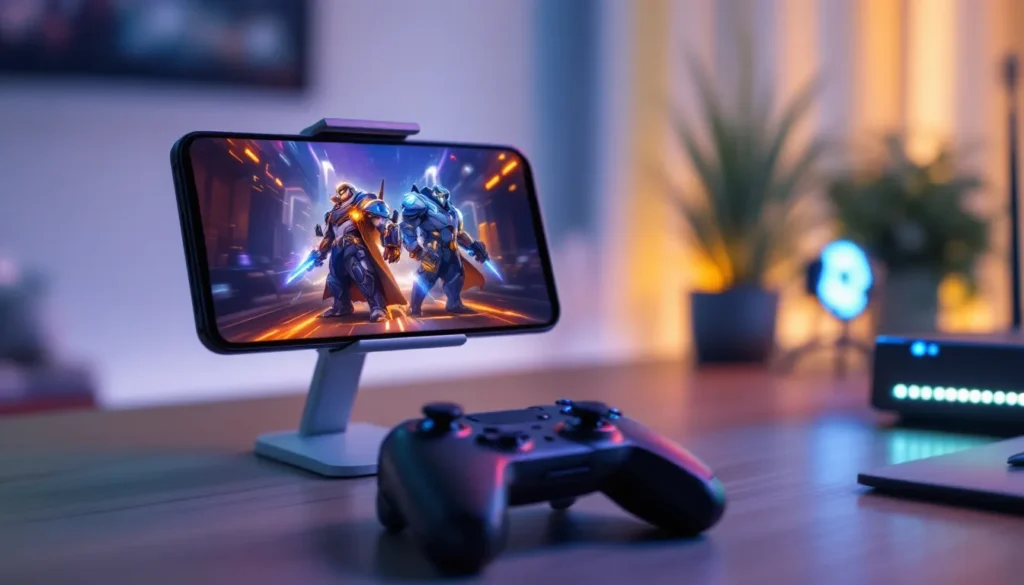
The core loop remains familiar: assemble a team of six heroes, each with unique abilities, and compete in objective-based modes against another six-player team. But on mobile, the pacing is tighter, the visual fidelity is optimized for smaller screens, and the input methods are fundamentally different. You’re not using a mouse and keyboard or a controller: you’re using touchscreen controls, gyro aiming, and contextual buttons designed around how people actually play on phones.
Blizzard’s goal was clear: make Overwatch accessible without sacrificing the strategic depth that makes the franchise tick. This means ability cooldowns still matter, ultimate economy is still critical, and positioning is still everything. A casual player can jump in and have fun: a competitive player can spend hours mastering hero mechanics and team synergy. The platform itself carries none of the baggage some players associate with “mobile games”, it’s not a glorified gacha slot machine masquerading as a game.
As of March 2026, Overwatch Mobile has launched with 25 heroes from the main game’s roster, a rotating selection of maps, and multiple game modes. The player base has already grown to millions across North America, Europe, and Asia-Pacific, with some players migrating from Overwatch 2 on console and PC specifically for the mobile convenience factor.
Gameplay Mechanics and Features
Overwatch Mobile retains the fundamental gameplay philosophy of its desktop counterparts but adapts mechanics for touch-based interaction and smaller screens. Team compositions still matter, you’ll need frontline tanks, damage dealers, and supports to win consistently. The objective-based modes (Payload, Control Point, Hybrid) are unchanged, so the strategic decision-making that defines Overwatch remains intact.
Abilities trigger the same way they do in Overwatch 2, but the UI layout is completely different. Your hero’s primary fire, abilities, ultimate, and movement controls are all positioned around the screen’s edges for ergonomic thumb access. Blizzard conducted extensive playtesting to find the optimal button placement, and it shows, the control scheme feels intuitive within a few matches, even if muscle memory from console/PC doesn’t transfer directly.
The visual scaling is notable. Mobile screens are smaller, so Blizzard increased character model sizes slightly relative to the environment, making targets easier to track at a glance. This prevents the gameplay from becoming a squint-fest while maintaining the same visual style fans recognize. Ability effects are clearer too, there’s less visual noise, which actually improves readability in chaotic teamfights.
Hero Selection and Team Composition
The launch roster includes core heroes across all three roles: Tank, Damage, and Support. Reinhardt, D.Va, and Orisa anchor tank play. Tracer, Soldier: 76, and Widowmaker represent the damage role. Ana, Lúcio, and Mercy cover support. There are 25 heroes total at launch, with Blizzard rotating additional heroes from the main game every few weeks.
Team composition fundamentals haven’t changed: you need frontline presence, reliable damage output, and healing to sustain. But, mobile’s tighter matches sometimes favor more aggressive compositions. Extended poke damage is less effective when everyone’s on a smaller screen with faster match pace, so brawling and burst damage heroes see slightly higher pickrates compared to Overwatch 2.
You’ll select your hero during a draft phase before each match (in competitive) or from a quick-pick menu (in casual modes). The selection process is identical to the main game, your team needs role flexibility, and one-tricks will struggle when their main is picked by teammates or isn’t ideal for the map.
Mobile-Optimized Controls and Interface
Touchscreen aiming works through a combination of direct tap input and gyro aiming. Your crosshair follows your thumb’s position on the right side of the screen, and you can enable gyro controls to fine-tune aim by tilting your device. Most competitive players enable gyro aiming once they’re comfortable, it’s more precise than pure touchscreen input, similar to gyro controls on Nintendo Switch.
Ability buttons are contextual. Your left thumb handles movement (virtual joystick in the bottom-left corner), while ability buttons cluster on the right side. Your ultimate ability sits in a prominent spot to prevent accidental use, and you can enable a confirmation prompt if you’re paranoid.
The HUD is cleanly organized: teammate healthbars and ult status appear along the top, enemy positions are mapped to the corners, and your personal stats (ammo, ability cooldowns) sit near your character model. There’s no clutter, which is crucial because mobile screens don’t have room for the same information density as a 27-inch monitor.
Menu navigation is streamlined for mobile. You’re not clicking through nested tabs, the main lobby shows your available matches, battle pass progress, and cosmetics in a single swipe. Loading times are typically 10-15 seconds, even on mid-range devices, because Blizzard optimized the experience across a wider range of hardware than Overwatch 2 requires.
Cross-Platform Play and Progression
Here’s where things get interesting: Overwatch Mobile is a completely separate ecosystem from Overwatch 2 on console and PC. Your account, cosmetics, competitive rank, and loot don’t transfer between versions. This was Blizzard’s deliberate choice, and it makes sense from a balance perspective, the games are too mechanically different to share the same competitive ladder. A Grandmaster on PC won’t instantly be Grandmaster on mobile.
But, cross-progression is coming in a future patch (expected Q2 2026). Your Blizzard account will link across platforms, allowing cosmetics purchased on one version to display on all platforms, starting with hero skins. Battle pass progress will remain separate because the mobile battle pass operates on its own schedule and content.
Cross-platform play is not supported in ranked competitive modes, but casual matches occasionally pool players from different platforms during off-peak hours. This is intentional, matchmaking algorithms are tuned to keep mobile players together in most scenarios, preventing someone on a controller from facing someone on a touchscreen in a competitive setting. The skill floor and optimal strategies differ too much to mix them regularly.
Progression systems are identical in structure: you earn experience through matches, level your account, unlock cosmetics, and climb a competitive ladder. The difference is in the pace. Mobile matches are slightly shorter (typically 8-12 minutes instead of 10-15), so progression feels snappier. Seasonal content updates happen on the same schedule as Overwatch 2, roughly every nine weeks, but the heroes, maps, and cosmetics introduced to mobile are on a staggered release schedule to account for platform differences.
Your Blizzard account security applies across all platforms, so enabling two-factor authentication on your main Blizzard account protects your Overwatch Mobile progress as well.
Getting Started: Installation and System Requirements
Overwatch Mobile is available on the App Store (iOS) and Google Play Store (Android). The download is free, and there are no subscription requirements, you can play without paying anything, though cosmetics and battle pass progress can be purchased with real money.
Minimum System Requirements
iOS:
- iOS 13.0 or later
- iPhone 8 or newer (iPad Air 2 and later also supported)
- 3GB free storage space
- 4GB RAM minimum (6GB recommended for smoother performance)
Android:
- Android 8.0 or later
- 3GB free storage space
- Snapdragon 835 or equivalent processor
- 4GB RAM minimum (6GB recommended)
Most smartphones from the last 4-5 years meet these requirements. Mid-range devices like the iPhone 11, Samsung Galaxy A51, or Google Pixel 4a run the game smoothly at 60fps with medium graphics settings. Flagship devices (iPhone 15 Pro, Galaxy S24) can push 120fps at maximum settings, but there’s no competitive advantage to higher framerates in this context, 60fps is perfectly playable and competitive-viable.
Network requirements are standard: Wi-Fi or 4G/5G connection. Mobile data usage averages 50-100MB per hour of gameplay, so it’s feasible to play on LTE, though Wi-Fi is recommended for ranked matches to minimize latency.
Installation Steps
- Open App Store (iOS) or Google Play Store (Android)
- Search for “Overwatch Mobile”
- Tap Download (free, no payment required)
- Wait for installation (typically 2-3 minutes on Wi-Fi)
- Launch the game and sign in with your Blizzard account (create one if needed)
- Complete the tutorial (takes 10-15 minutes)
- Choose your first hero and jump into a casual match
The tutorial covers basic controls, hero abilities, and objective modes. You can skip it if you’re experienced with hero shooters, but it’s worth running through once to get familiar with the mobile-specific control scheme. After tutorial completion, you’ll be placed in matches with other new players for your first few games, matchmaking tracks your performance and adjusts difficulty accordingly.
Essential Tips for New Players
Success in Overwatch Mobile hinges on fundamentals: positioning, ability timing, and team awareness. These principles carry over from Overwatch 2, but mobile’s tighter matches demand slightly faster decision-making.
Mastering Your Main Hero
Choose one or two heroes to practice intensively before branching out. This isn’t about one-tricking forever, it’s about building muscle memory with a specific kit so you can focus on macro-level gameplay (positioning, map awareness, ult economy) instead of micro-level mechanics (ability sequencing, timing).
Start with forgiving heroes. Soldier: 76 is an excellent damage hero for new players because his hitscan weapon is straightforward, his self-heal is forgiving, and his ultimate provides value even at lower skill levels. Lúcio teaches positioning and escape mechanics while healing teammates. Reinhardt teaches tank fundamentals: leading your team into fights, protecting the backline from threats, and using your shield reactively.
Practice your hero in casual matches first. Casual play lets you learn matchups (which enemy heroes counter your main, which your main counters) without the pressure of a competitive rank. Once you’re comfortable, typically 20-30 casual matches, transition to competitive if you want.
Watch ability cooldowns obsessively. On mobile, cooldown timers display clearly on ability buttons. If your escape ability (like Tracer’s Blink) is on cooldown, you’re vulnerable. If your damage ability (like Symmetra’s Charge) is off cooldown, that’s your signal to look for openings. Ability economy is invisible to newer players but separates competent players from good ones.
Map Knowledge and Positioning
Overwatch Mobile uses six maps at launch: King’s Row, Ilios, Temple of Anubis, Lijiang Tower, Route 66, and Oasis. Each map has chokepoints (narrow areas where fights cluster), high ground advantages (elevated positions that provide sightlines), and flanking routes (sneaky paths for mobile heroes).
Spend time in custom games exploring each map solo. Run around, learn sightlines from your spawn to common fights, identify which areas favor ranged heroes (open spaces) and which favor brawling heroes (tight corridors). Mark high ground positions mentally, knowing where the enemy Widowmaker could be is half the battle.
Positioning is context-dependent, but a few rules apply universally:
- Stay near teammates. Overwatch is a team game. If you’re split up, focus the enemy team on winning isolated fights. Stick together and leverage numbers advantage.
- Play around your team composition. If your team is shield-heavy (Reinhardt + Sigma), play near the shields. If your team is dive-focused (Tracer + Winston), expect to engage in aggressive flanks.
- Avoid obvious sightlines early in fights. Don’t waddle down the center of King’s Row with no cover. Use corners, walls, and cover to close distance before committing to a teamfight.
- Play where you can contribute. Damage heroes shouldn’t camp the backline: they should be dealing damage. Supports shouldn’t be too far from recipients but shouldn’t be in the front line either.
Internalize these principles by watching your replay system (enabled after rank 25). Review your deaths, were you out of position? Did you miss an escape? Did your team lack healing? Learning from mistakes accelerates improvement more than anything else.
One practical tip specific to mobile: smaller screens mean less peripheral vision. Glance at the minimap frequently to catch flanking enemies. Your eye naturally focuses on the center, but enemy Genji might be wrapping around from the left. Habit training yourself to check the minimap every 2-3 seconds prevents getting ambushed.
Competitive Modes and Ranking System
Competitive play opens at account level 25. Before that, you’re restricted to casual modes (Quick Play) to ensure new players understand basic mechanics before diving into ranked.
The ranking system mirrors Overwatch 2’s structure: Bronze, Silver, Gold, Platinum, Diamond, Master, and Grandmaster. You place into a rank after ten placement matches, then climb or fall based on match results. Winning a match grants points (typically 20-30 per win), and losing deducts points (same amount). You rank up when you accumulate enough points, and you rank down if points drop below the threshold.
Season one (March–May 2026) was a soft launch to establish baselines. Most new players placed in Silver/Gold, with experienced Overwatch 2 players landing in Platinum/Diamond. By mid-season, the competitive landscape had stabilized, and Blizzard balanced heroes based on pickrates and win rates in ranked.
Matches are 5-on-5 in ranked, mirroring Overwatch 2’s shift from 6-on-6. This tighter player count works surprisingly well on mobile, it reduces visual clutter and speeds up decision-making. Role queue (Tank/Damage/Support) is enforced, preventing stack-based cheese compositions.
Competitive seasons last nine weeks, matching Overwatch 2’s cadence. Each season introduces new cosmetics, balance changes, and occasionally new heroes. Seasonal rewards (cosmetics, competitive points) are based on your final rank and match participation.
The Mobile Esports Scene
Blizzard is actively pushing Overwatch Mobile esports in 2026. The mobile esports scene has erupted faster than anyone expected, with both grassroots tournaments and official Blizzard-sanctioned events running concurrently.
Esports organizations like T1, FaZe Clan, and Spicy have already fielded rosters specifically for Overwatch Mobile. Prize pools for regional tournaments are already in the $100,000+ range, with Blizzard funding qualifiers for an international championship later in 2026. Several high-level Overwatch 2 pros have transitioned to mobile, leveraging their game sense and hero mechanics knowledge.
The meta on mobile differs slightly from Overwatch 2. Ultimate economy moves faster due to match pacing, so aggressive ultimate usage is rewarded. Hitscan damage heroes (like Widowmaker and Soldier: 76) see higher pickrates because closeup spray-and-pray is less effective on mobile than on PC with aim assist. Tank line selections favor shield-heavy tanks (Reinhardt, Barrier-based heroes) because coordinated damage is harder to spread without a full squad in voice comms.
Tournament format is typically best-of-three or best-of-five matches across a map rotation. Teams draft in a hero-ban format, each side bans two heroes to prevent mirror matchups, then select their composition. The competitive ruleset is slightly different from casual play: no duplicate heroes (each hero can only be picked once per team), and hero bans rotate weekly to prevent stale metas.
If competitive Overwatch interests you, watching esports is a phenomenal way to learn. Several sources like DualShockers cover competitive Overwatch Mobile tournament results and analysis, breaking down why top teams succeed and how the meta evolves. Many pros stream ranked matches on Twitch, offering real-time commentary and decision-making rationale.
Monetization and Battle Pass System
Overwatch Mobile is free-to-play, but cosmetics cost money. This is important to clarify upfront: you don’t need to spend a single dollar to be competitive. Cosmetics are 100% cosmetic, they don’t grant gameplay advantages, hidden stats, or loot boxes. A legendary skin on Tracer doesn’t make her faster or deadlier: it just looks cooler.
The monetization consists of three tiers:
1. Free-to-Play
You can play indefinitely without spending money. You’ll earn cosmetics through battle pass free tracks and seasonal rewards, progressing at a slower pace than paying players but progressing nonetheless. You’ll unlock heroes exclusively through gameplay, no heroes are locked behind paywalls.
2. Battle Pass (Premium)
The premium battle pass costs $9.99 per season and grants access to 50 cosmetic rewards over a nine-week seasonal period. These rewards are mostly skins, emotes, and sprays. The premium pass also grants battle pass points (which count toward cosmetic unlocks) and accelerates progression speed. The battle pass does not expire after a season, you can complete it at your own pace even after the season ends.
3. In-Store Cosmetics
Hero skins cost $5-15 depending on rarity. Legendary skins (the rarest tier) cost around $15. These are one-time purchases with no subscription required. If you’re selective, you can spend $30-50 across an entire season on cosmetics you genuinely want and skip everything else.
Blizzard does not use loot boxes, gacha mechanics, or randomized cosmetic drops. This was a deliberate design decision to avoid the predatory monetization that plagued Overwatch 2’s first years. You know exactly what you’re buying and what you’re getting, no gambling mechanics, no RNG cosmetic drops.
A controversial aspect: cosmetics from Overwatch 2 don’t automatically transfer to Overwatch Mobile at launch. But, cross-progression is coming in Q2 2026, and Blizzard has confirmed that cosmetics purchased on either platform will appear on both versions. Your Overwatch 2 Legendary skins won’t vanish: you just can’t use them on mobile until the cross-progression patch.
Comparison with Console and PC Versions
It’s natural to wonder how Overwatch Mobile stacks up against Overwatch 2 on PlayStation, Xbox, and PC. The short answer: they’re siblings, not equals. Each version has strengths.
Overwatch 2 (PC/Console) Advantages:
- Larger screens provide better situational awareness
- Mouse/keyboard (PC) or controller input is more precise for certain heroes (hitscan heroes, heroes requiring rapid ability input)
- Higher refresh rate displays (144Hz+ monitors) improve competitive advantage
- Voice chat is more seamless on consoles and PC
- Graphical fidelity reaches higher peaks on powerful hardware
Overwatch Mobile Advantages:
- Play anywhere, during commutes, breaks, or downtime
- No hardware investment required (most people own a smartphone already)
- Lower barrier to entry (phone is cheaper than a console or gaming PC)
- Faster match times (8-12 minutes vs. 10-15 minutes) mean more games per session
- Gyro aiming provides a control scheme many players find intuitive after a brief adjustment period
Mechanically, they’re 95% identical. The hero abilities function the same way, maps are mostly identical (though some are slightly rescaled), and the meta shares similar principles. But, the flow is different because of input methods and screen size. Shotgun heroes like Roadhog feel slightly different when you’re aiming with touchscreen plus gyro instead of a mouse. Hitscan heroes require different muscle memory. But these differences take maybe 10-20 hours of practice to overcome if you’re experienced on one version.
Which version should you play? If you’re primarily a couch gamer with a PC or console setup, stick with Overwatch 2. If you want a commitment-light experience and don’t have 4+ hours per week to dedicate to gaming, mobile is perfect. If you travel or commute regularly, mobile becomes a no-brainer. Many players maintain accounts on both versions, switching based on circumstance.
Community and Social Features
The social experience on Overwatch Mobile is robust. You can add friends, join teams (guilds), and participate in seasonal tournaments through the app. Voice comms are available on mobile, your phone’s speaker and microphone work fine for team communication, though most competitive players wear earbuds with a built-in mic for better audio clarity.
Team functionality launched in Season Two (May 2026). Teams can organize scrimmages, participate in official tournaments, and earn team-exclusive cosmetics. Team size caps at 20 members, but you only need five players for competitive matches.
Community events happen weekly: limited-time arcade modes with unique rulesets, hero challenges (“deal 100,000 damage as Symmetra this week”), and cosmetic unlock events. These provide rewards for active participation, incentivizing logging in regularly.
Blizzard operates an official Overwatch Mobile Discord with over 500,000 members where players share clips, ask questions, organize groups, and discuss meta shifts. Resources like IGN also cover Overwatch Mobile news and guides, though dedicated mobile gaming communities on Reddit (r/Overwatch, r/OverwatchMobile) are where most casual discussion happens.
One social concern: matchmaking queues on mobile can exceed 10 minutes during off-peak hours in lower-populated regions. Blizzard is working on regional server optimization to reduce queue times, but if you’re in a region with fewer players (Southeast Asia outside major cities, rural areas), expect slightly longer waits.
Future Updates and Roadmap
Blizzard has publicly committed to a robust roadmap through 2027, with regular updates adding heroes, maps, and balance changes. Here’s what’s confirmed or heavily rumored as of March 2026:
Heroes Coming Soon:
Heroes are staggered across seasons. Blizzard is adding one new hero every two seasons, with experimental heroes available in arcade modes before ranked release. This slower rollout compared to Overwatch 2 allows for thorough balance testing on mobile’s unique input method.
Maps in Development:
New maps are coming in seasons two and three. Blizzard is also rescaling some classic Overwatch maps (Junkertown, Dorado) specifically for mobile, accounting for the smaller viewing angle.
Balance Philosophy:
Blizzard has stated they’ll balance Overwatch Mobile independently from Overwatch 2. This means a hero might be overpowered on PC but balanced on mobile (or vice versa), resulting in different patch notes for each version. This flexibility was the right call, the games play fundamentally differently enough to justify separate balance trees.
Cosmetic Roadmap:
Collaborations with esports teams will result in team-branded skins. Blizzard is also working with K-pop agencies on limited cosmetics (similar to the Overwatch K-Pop Skins released on console and PC). Expect at least two major cosmetic collaborations per season.
Competitive Structure:
An international championship (Overwatch Mobile World Cup) is planned for Q4 2026, with regional qualifiers starting in July. Prize pool is expected to exceed $5 million, making it one of the largest mobile gaming tournaments ever. Blizzard is partnering with regional esports organizations to ensure widespread participation and broadcasting.
Cross-Progression:
As mentioned, cross-progression launches in Q2 2026, allowing cosmetics to appear across all Overwatch versions from a single Blizzard account.
Optimization:
Blizzard is continuously optimizing performance across lower-end hardware. Upcoming patches will allow players on older devices to maintain 60fps at lower graphics settings, expanding the addressable market.
One interesting consideration: rumors suggest Overwatch Mobile might get console ports (Nintendo Switch) by 2027, though this isn’t officially confirmed. A Switch version would consolidate the console and mobile versions into a single “handheld” experience, though porting touchscreen controls to a controller would require significant rebalancing.
Conclusion
Overwatch Mobile is a surprisingly complete adaptation of Blizzard’s hero shooter formula, designed for the way people actually play games on phones. It respects the source material while embracing mobile conventions, no hero is locked behind paywalls, cosmetics don’t grant advantages, and competitive integrity is intact.
If you’ve been curious about Overwatch but never committed to a console or PC version, mobile is the perfect entry point. If you’re an esports enthusiast, the emerging competitive scene offers genuine prize pools and career opportunities. If you’re an existing Overwatch 2 player looking for a complementary experience, mobile fills the “play anytime, anywhere” niche.
Download it from your phone’s app store, run through the tutorial, and jump into casual matches. The community is welcoming to new players, and the skill ceiling is high enough to keep you engaged for hundreds of hours. Whether you’re grinding for Grandmaster or just want a break from your usual games during lunch, Overwatch Mobile has something for everyone.
The meta will shift, new heroes will launch, and the esports scene will mature, but the fundamentals that made Overwatch fun in 2016 are alive and well on mobile in 2026. If that sounds appealing, your next favorite game might be waiting in your app store. For deeper technical details on optimization, checking resources like Pocket Tactics offers mobile-specific gaming guidance and tier lists that may help optimize your experience across different devices.