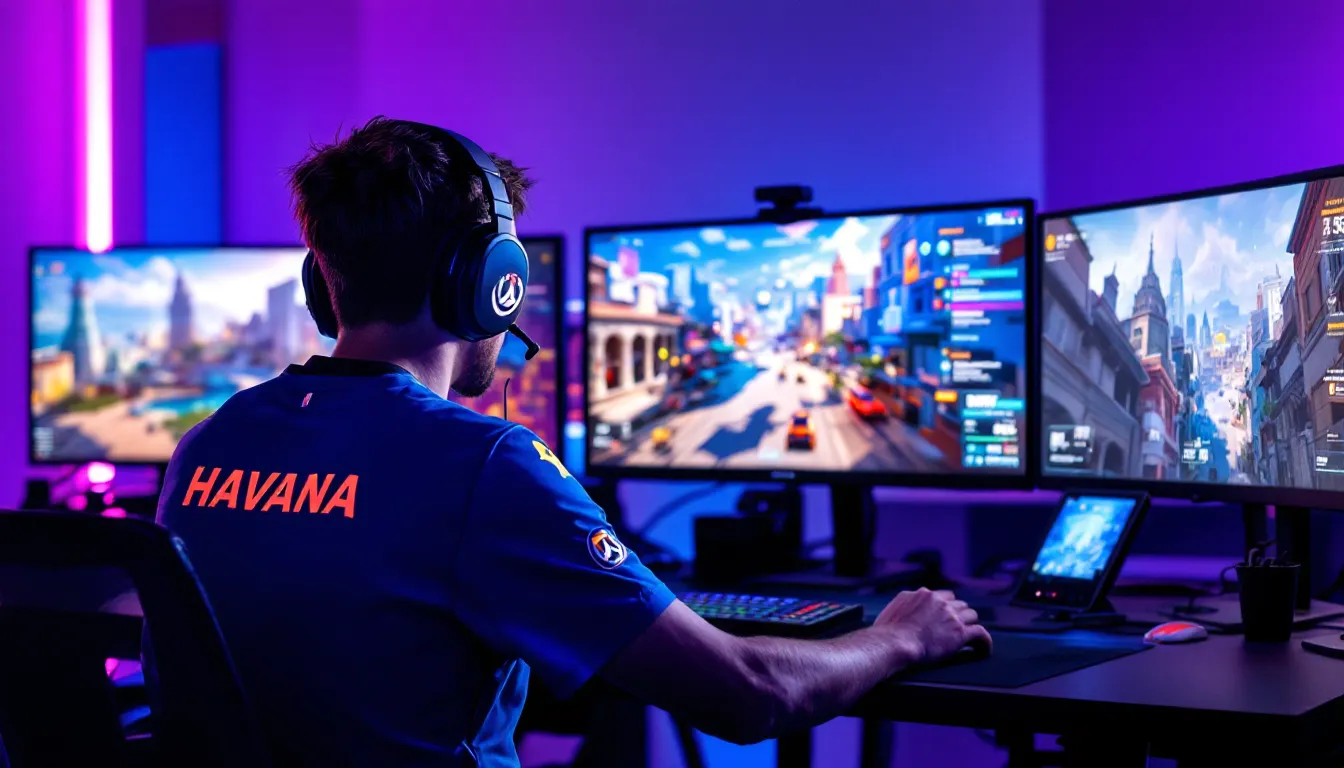

Havana is one of Overwatch 2’s most demanding payload maps, and if you’re grinding competitive right now, you’re seeing it plenty. The map punishes sloppy positioning, rewards coordinated teamwork, and separates the players who understand its rhythm from those just winging it. Whether you’re stuck in mid-rank hell or pushing for grandmaster, Havana is the kind of map where small improvements compound fast. The good news? The fundamentals aren’t hidden, they’re learnable. This guide walks you through everything: map layout, hero picks, payload strategy, and the mistakes that are probably costing you wins right now.
Table of Contents
ToggleKey Takeaways
- Havana Overwatch demands map control through high-ground dominance and coordinated positioning rather than pure mechanical skill, rewarding teams who understand positioning and spacing around the three distinct checkpoints.
- Master ultimate economy by grouping with teammates before committing to payload pushes and calculating the minimum ultimates needed to break defensive positions, then using patience to charge them strategically rather than recklessly.
- Tailor your hero composition to Havana’s layout: prioritize Reinhardt or Sigma for tanks, Lúcio or Ana for supports, and flanking heroes like Tracer for damage dealers who can exploit disconnected defensive positions.
- Avoid common losses by establishing high-ground control in the first 30 seconds, resisting the urge to touch the payload on cooldown, and maintaining group cohesion during checkpoint pushes instead of splitting up.
- Study professional Havana gameplay and record your own deaths to identify preventable positioning mistakes, as most rounds are lost through poor decision-making around ultimate denial and sightline control rather than aim deficiency.
- Start by mastering one or two heroes per role before expanding your pool, ensuring depth of knowledge on Havana-specific positioning and mechanics translates into consistent climbs up the competitive ladder.
What Is Havana and Why It Matters for Competitive Play
Havana is a hybrid payload map set in Cuba, combining two phases: a traditional payload push from the 1st checkpoint through the final destination, then a stationary objective hold. It’s been a fixture in competitive Overwatch 2 since the game’s launch, and it remains one of the most contested maps in ranked and pro play.
Why does Havana demand so much respect? It’s all about the choke points and sightline control. The map has distinct phases with natural defensive positions that reward teams who understand positioning over pure mechanical skill. If you’re pushing the payload, you’re often forced into tight corridors where proper ult economy and ultimate management become everything. On defense, high ground dominance and spawn advantage can shut down entire pushes.
The meta on Havana shifts with balance patches, but the core philosophy remains: whoever controls the space around the payload controls the map. This is why it appears constantly in professional tournaments and why climbing on Havana specifically builds real, transferable skills. You learn how to coordinate with your team, manage resources, and adapt when a single ult changes the entire fight.
Map Layout and Key Locations You Need to Know
Understanding Havana’s geography is non-negotiable. The map is split into three distinct sections, each with its own tactical challenges and opportunities for both attackers and defenders.
The First Checkpoint: Opening Strategies
The first checkpoint sits at the end of a wide plaza with significant high ground on both sides. Attackers spawn in a building on the left flank, giving them natural access to the left-side high ground. Defenders have the advantage of already controlling the main payload area and can position on rooftops, balconies, and the center structure.
For attackers, the opening fight is about establishing control before committing to the payload. Most teams push hard through the left side initially, using the high ground to pressure defenders away from the payload itself. Supports should stay mobile here, standing around the payload in the first fight is how you get picked off. The meter to the checkpoint is long enough that defenders can set up multiple fallback positions, so attackers who expect an easy roll are in for a rude awakening.
Defenders should leverage the height advantage and force attackers into an inefficient first fight. The longer you stall without feeding ults, the better your odds when attackers eventually break through. One of the most common mistakes here is defenders pushing too far forward trying to get kills, you often give away position and ult charge for nothing.
Mid-Map Transitions and Control Points
After the first checkpoint, the map opens into a more cramped urban section with multiple cover points and sight-line blockers. This is where coordination really shows. The payload has to navigate through narrow streets with rooftop angles that are absolute nightmares for unprepared teams.
For attackers, this is where you group up and move deliberately. The space is tight enough that one good defensive position can halt forward progress. Smart defenders will position one or two players on high ground to delay while the main team sets up at the next checkpoint. The trick is rotating your team before the payload gets completely locked down, a stalled payload on Havana means defenders are farming ults while you’re stuck in limbo.
Defenders benefit heavily from having a hero who can hold main sight lines while teammates set up secondary positions. This section is where Widowmaker becomes genuinely scary on defense, and where Tracer or Genji can create absolute chaos on the flank. Attackers need to either clear high ground aggressively or respect it and play around it.
Final Stretch and Payload Endgame
The final checkpoint is brutal. The payload pushes into an open plaza with multiple high-ground angles, and defenders can stack positions across two or three distinct areas. The space is wide enough that defenders can spread out, but tight enough that attackers can’t just ignore them and push through.
This is where ultimate economy becomes the difference between a checkpoint and a hold. Attackers will usually have a numbers advantage or ultimates charged, but defenders are positioned better and can focus fire on whoever pushes first. Teams that win final checkpoint fights usually do so because they staggered their offense, forcing defenders to respond to multiple threats instead of collapsing on the main payload.
Defenders shouldn’t get overconfident. Losing map control here is rough because the payload sits in one of the easiest spots to defend overall, but a well-coordinated, ult-heavy push can break even a perfect defensive setup. If you’re defending, your job is denying ult charge and positioning for next fight advantage, not holding 1v6 against every attack.
Best Heroes for Havana: Team Composition Tips
Havana’s layout dictates which heroes thrive and which ones struggle. The map demands heroes who can hold terrain and abuse high ground, while less position-dependent heroes can feel underwhelming.
Essential Tanks and How to Position Them
Reinhardt remains a staple on Havana because the payload and choke points create natural fronts where his shield is invaluable. When used correctly, he locks down space and lets your damage dealers breath. The trap? Standing too passively. Bad Reinhardts just hold shield and wait: good ones push forward in coordinated waves, breaking defensive setups through sheer frontline pressure.
Sigma has become increasingly meta on Havana because his Kinetic Grasp eats incoming projectiles and shields can hold weird angles that Reinhardt can’t. His Hypersphere slam creates burst damage potential that forces defenders to respect him differently. The learning curve is steep, but pros are running him at high ranks for a reason.
D.Va works in specific situations, particularly when you need to contest high ground or pressure a squishy backline. She’s not a primary tank on Havana, her shield is too fragile for payload defense, but as a secondary tank or flex pick, she creates pressure that solid teams exploit.
Avoid Junker Queen and Wrecking Ball on Havana unless your team specifically drills those comps. Queen lacks the defensive safety net to protect teammates through the chokes, and Ball gets pressured too heavily by coordinated teams. These picks can work in niche situations, but they’re usually value-stealing from better options.
Tank positioning on Havana is all about committing to a space and holding it until your team regroups. Don’t spam-jump between positions, that’s feeding ults. Stay with your supports, eat damage, and trust that your teammates will convert your space advantage into kills.
Support Heroes and Healing Angles
Lúcio is almost essential on Havana because of his healing radius and mobility. He keeps mobile players alive while maintaining flexibility to escape dives. Bad Lúcio players get caught out of position: good ones sightline the payload while using speed boost to kite away from divers. On defense, his potential to hold high-ground positions is underrated.
Ana thrives when her team respects her positioning. The sightlines on Havana allow her to hold power positions and snipe from cover, but she requires teammates to protect her from dives. Her sleep dart and anti-heal grenade create clutch momentum swings. Pair Ana with a hero who can assist with diver protection (Tracer, Genji, or a second support), and she becomes a game-changer.
Zenyatta is glass cannons on this map. High-ground positioning and cover become everything. When stacked correctly, his damage potential turns him into a third damage dealer, which some teams love. The risk is that coordinated enemies will exploit his low HP pool. He’s playable but requires trust in your defensive positioning.
Mercy and Moira have worse sightlines on Havana compared to other maps. The map forces you into tight spaces where Mercy can’t afford to be floating in the open, and Moira’s range gets clipped by all the cover. They’re not unplayable, but you’re giving up sightline pressure compared to Lúcio, Ana, or even Zenyatta.
Support positioning on Havana is about staying alive first, healing second. If you die, your team loses numbers AND healing. Play around cover, avoid telegraphed positions where enemies farm ults, and use the map’s architecture to kite away from threats.
Damage Dealers: Flankers vs. Projectile Specialists
Flanking heroes like Tracer, Genji, and Sombra feast on Havana’s disconnected high-ground positions. Defenders often station solo heroes to hold lines, and good flankers punish that by taking unconventional routes and eliminating isolated targets. On attack, these heroes relieve pressure from your main tank by creating chaos on the backline.
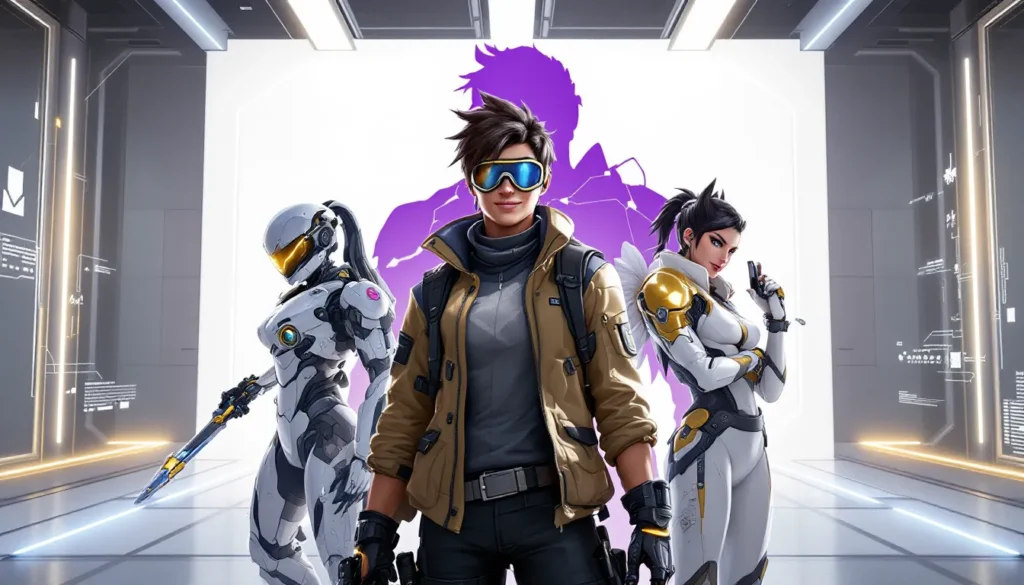
Tracer specifically is arguably the best damage hero on Havana right now. Her mobility lets her access angles that other heroes can’t, her blink usage mirrors the map’s rotations, and her burst damage deletes out-of-position supports. She’s also incredibly useful on defense when ahead in space.
Genji fills a similar role with higher skill expression. His dash resets and wall-climb create path options, and his deflect creates defensive utility. The issue is he’s harder to coordinate with a payload push, his aggressive playstyle sometimes conflicts with grouped team movement.
Projectile specialists like Pharah and Junkrat have worse time on Havana because its sightlines limit high-flying positioning. Pharah especially gets pressured by hitscan defenders and doesn’t have clean angles. But, certain map sections (like the open plaza at final checkpoint) can let her shine if her team plays around her.
Widowmaker on defense is genuinely oppressive. The long sightlines before the first checkpoint and again near the final stretch give her clean picks. She forces attackers to either play around her or deal with incoming sniping. On attack, she’s more situational.
Soldier: 76 and Ashe are solid hitscan picks that hold sightlines and output consistent damage. Neither dominates Havana specifically, but both are reliable for teams that run traditional ranged damage setups. Ashe has the slight edge because her scope and dynamite help her duel threats at range, while Soldier needs more teammate coordination to be effective.
Damage positioning on Havana means respecting sightlines but not overcommitting. Stand beside your tank, use cover aggressively, and rotate before the payload gets pinned down. Flankers should split the team’s attention, but they can’t go so deep that they’re fighting alone for 15 seconds.
Payload Strategy: Attack and Defense Tactics
Payload management is where Havana separates serious teams from casual players. The payload itself is a resource, touching it charges everyone’s ultimates, so smart teams control when and where fights happen.
Attacking the Payload: Breaking Through Chokes
Most attackers make the mistake of committing all six players to the payload immediately. That’s feeding. Solid offensive strategy on Havana is about establishing space before the payload starts rolling.
Send one or two heroes to scout high ground and clear early sightlines. If defenders have established a position, your frontline doesn’t have a shot at moving the payload forward. Once high ground is roughly contested, your main tank steps up with supports behind him, and damage dealers focus fire on whoever’s holding the choke. The payload is almost secondary, you’re fighting for space, and the payload follows naturally.
Ultimate economy matters enormously. If you’re pushing the first checkpoint and you don’t have offensive ultimates (tank ults, support ults, Grav from Zarya, etc.), you’re probably not breaking through. Teams should group up, charge ults through some early poke, and push the choke as a six-man unit when ultimates are ready. A staggered push where one or two players walk in first is basically a gift to defenders.
Vocal callouts prevent chaos. Designate who’s taking high ground, who’s holding sightlines, and when you’re going all-in. If teammates are calling different strategies, you’ll have someone trying to hold ranged position while the rest of the team walks into a choke. That’s an instant wipe.
One final point: don’t get greedy trying to touch the payload in bad fights. If defenders reset, let them reset. Touch the payload, reset spawn timers, and wait for ultimates again. Continuous, low-value touching is how teams stall out on Havana instead of advancing.
Defending the Payload: Holding High-Ground Advantages
Defense on Havana starts before the enemy even moves the payload. Position one or two heroes on high ground to establish early information and force attackers into inefficient rotations. A solo Widowmaker or Ana on the right high-ground position can delay entire pushes just by existing.
Once attackers start grouping, bring your whole team together. Spread slightly across multiple sightlines so that even if one position gets collapsed, you have secondary angles. The payload’s path is linear, so defenders have a huge advantage, you know exactly where it’s going. Attackers have to either clear you or push through you, and both options take resources.
Ultimate economy on defense is about denial. Force attackers to waste ultimates on clearing your positions, then reset and hold. If an attacker lands a great Zarya Graviton Surge, you might have to sacrifice one or two heroes to keep the payload from moving. That’s a win if it costs them their main ult.
High ground is your primary advantage. If attackers get above you, the defense crumbles. Dedicate a hero to maintaining that high ground, someone like D.Va, Tracer, or Genji who can get back up fast if pushed down. Losing vertical space is how defenses get rolled.
Rotate deliberately. Defenders sometimes tunnel-vision on holding one position and don’t establish the next checkpoint far enough back. As soon as the payload gets rolling, confirm your team’s next position is already set. A disorganized rotation is an open door for attackers to snowball.
Pro teams rotate defensive positioning around the payload’s path, but it’s critical to maintain forward pressure while doing so. You want to delay progress without getting isolated. Position at the next likely choke while maintaining vision on attacker grouping. This is where communication separates coordinated teams from soloqueue ransoms fighting like individuals.
Common Mistakes and How to Avoid Them
Even players with solid mechanics make strategic mistakes on Havana that cost rounds. Here are the biggest ones, and how to fix them.
Ignoring high ground early. Teams that don’t clear or contest high ground before committing to the payload are playing at a disadvantage from the start. The first 30 seconds of Havana should always include dedicated high-ground pressure. If your team isn’t thinking about vertical space, you’re already losing.
Touching the payload on cooldown. Some players touch the payload whenever it’s nearby, even in losing fights. This charges enemy ultimates while your team’s isn’t ready. Touch the payload when it matters, when you’re grouped, when you have ult advantage, or when you need to secure checkpoint progress. Otherwise, hold space and let fights develop.
Overcommitting to one flank. Havana has multiple paths through each section. Teams that spam the same route predictably get exploited. Mix it up. Some pushes go left side, some go right, some go middle. Defenders can’t hold all three simultaneously, so variety forces them to rotate and scramble.
Splitting up during critical moments. This is the ultimate Havana killer. If your team is scattered across the map during a checkpoint push, defenders will farm ults while picking off isolated heroes. Stick together in tight fights. Spread out during rotations and downtime, but clump up hard when the payload is moving.
Poor spawn positioning. New players respawn and immediately run to the payload. Smart players spawn, group with teammates, and reset together. If you’re trickling back, you’re feeding. Always wait for at least two teammates before moving forward.
Not respecting enemy ultimates. If the enemy Reinhardt has ult and you’re walking into a choke, you’re getting shattered and deleted. Play around ultimate threats. Back off, farm more damage, and push again when ults are used. Patient play beats reckless aggression every time.
Defensive positioning too far back. Holding the next checkpoint when the payload is still at the current one is throwing. Defenders should hold at the current checkpoint, delay as long as possible, then reset to the next one. Too much backline depth gives away meters for free.
Advanced Tips for Ranked and Competitive Play
Once you understand Havana’s basics, these advanced concepts separate high-rank players from mid-rank grinders.
Study high-level gameplay. Professional teams and grandmaster streamers handle Havana differently than ranked games. Pro player settings document how top competitors configure their heroes and positioning. Watching how these teams coordinate ultimates, rotate between checkpoints, and manage sightline control gives you blueprints to steal. You won’t execute perfectly, but the principles transfer.
Map-specific ultimate economy. Don’t charge ultimates at random. Calculate fights: “We need three ults minimum to break this checkpoint, we have two ready, so we poke for 20 seconds and push when the third is charged.” Teams that think about ult counts ahead of time consistently win fights against teams that just brawl.
Position relative to your supports. Tanks and damage dealers who stray too far from healing angles feed unnecessary picks to enemies. Stay in sightline of your supports, especially around checkpoints. If you’re taking damage, you should always be healable. Playing for picks or flashy plays often means playing away from support, that’s a luxury for pub stomping, not competitive.
Learn the hero matchups. Havana’s space favors certain matchups. Reinhardt into Sigma is rough for Rein because Sigma eats hammer combos. Ana into Tracer is tough because Tracer can close gaps and Ada can’t, while Lúcio into Zenyatta usually goes in Lúcio’s favor because he can close range while Zenyatta gets confirmed. Understanding these micro-matchups helps you draft better and play around your team’s advantages.
Evaluate patch notes and meta shifts. Esports coverage sites track balance changes and how they affect map viability. A hero nerf might shift Havana’s meta entirely. Stay updated on current patches and adjust your plays accordingly. Recommendations from last season might not work this season.
Record and review your deaths. Seriously. Watch your own footage, count how many times you died to ult spam (preventable with better positioning), how many times you were out of position (preventable with map awareness), and how many times you made solo plays that isolated you (preventable with team discipline). Most deaths on Havana are preventable through better decision-making, not better aim.
Understand off-meta picks in context. Sometimes teams run unconventional lineups that catch standard comps off-guard. The key is understanding why a pick works in specific moments. Junkrat on attack into a bunker defense, Hanzo on defense with high-ground overlap, Torbjörn for a last-stand scenario, these aren’t random. They solve specific problems. If you understand the problem-solution dynamic, you can predict when off-meta picks will work.
Communication discipline. Callouts should be specific and fast. “Widow right side” is better than “there’s an enemy.” “Tank pushing choke, need damage” is better than “push.” Efficient communication prevents the chaos that costs rounds.
Practice patience. The difference between rank 3000 and rank 3500 on Havana is often just patience. Playing safe, waiting for ultimate advantages, and avoiding solo plays. It’s less flashy than swinging duels, but it wins consistent games.
Conclusion
Havana rewards understanding over randomness. You don’t need perfect aim to climb on this map, you need to know positioning, respect sightlines, understand ultimate economy, and respect your team. Study the checkpoints, learn which heroes work in which sections, and drill the fundamentals until they’re reflexive.
The meta will shift. Patches will rebalance heroes. But the core principles, control high ground, manage ultimates, stay grouped, and respect defensive positions, will remain true. Master these, and you’ll master Havana regardless of what the next balance patch brings. Gaming journalists and guides at major outlets regularly cover meta shifts, so staying informed about patch impacts helps you adapt faster than the competition.
Start small. Pick two heroes in each role, learn their positioning on Havana specifically, and drill that role until it’s natural. Stop trying to play everything. Depth beats breadth on map-specific play. Once you’ve climbed with one role, expand. The skills transfer, and you’ll accelerate learning on the next hero.