
Star Wars Battlefront on Xbox One remains one of the most immersive multiplayer experiences available on the console, even as we head deeper into 2026. Whether you’re dropping into Tatooine for the first time or you’ve logged hundreds of hours across its maps, this guide covers everything you need to dominate the battlefield. From understanding the core mechanics to mastering advanced strategies, we’ll walk you through what makes Battlefront tick on console and why it still commands a dedicated player base. The game’s blend of iconic Star Wars moments, tactical gameplay, and fast-paced action creates an experience that casual players and competitive enthusiasts both appreciate. If you’re looking to level up your skills or just want to know what all the fuss is about, you’re in the right place.
Table of Contents
ToggleKey Takeaways
- Star Wars Battlefront on Xbox One emphasizes map control, teamwork, and objective awareness over individual kill counts, with fast time-to-kill mechanics requiring precision and positioning.
- New players should master blaster accuracy, ADS mechanics, and cover usage before advancing to hero strategies and competitive ranked modes.
- The hero system is Battlefront’s signature mechanic—spawn tokens are earned through strong performance and should be used strategically for objective control rather than chasing kills.
- Controller sensitivity, deadzone settings, and pre-aiming common enemy positions are critical mechanical skills that separate casual players from competitive veterans.
- Game Pass integration keeps the player base active and constantly refreshed with new players, ensuring populated matchmaking and stable multiplayer communities across all game modes.
- Star Wars Battlefront rewards fundamentals including solid aim, intelligent positioning, objective awareness, and team coordination through its deep yet approachable gameplay design.
What Is Star Wars Battlefront And Why It Still Matters On Xbox One
Game Overview And Core Mechanics
Star Wars Battlefront is a large-scale multiplayer first-person and third-person shooter that puts you in the middle of iconic Star Wars conflicts. The game strips away complicated progression systems and focuses on immediate, visceral combat where every blaster shot feels weighty and consequential. You’re not just shooting generic enemies, you’re fighting Stormtroopers, Rebel soldiers, and occasionally wielding the Force itself as a hero character.
At its core, Battlefront is about map control, objective awareness, and positioning. Unlike traditional kill-death-focused shooters, most game modes reward teamwork and objective completion. Holding a flag, defending a position, or destroying a walker matters more than your kill count. The game runs at a solid frame rate on Xbox One, and the responsiveness of controller input is critical to your success. Time-to-kill (TTK) is relatively quick, skilled players can eliminate opponents in 2-4 shots depending on the weapon and range, which means reaction time and accuracy are paramount.
The hero system is Battlefront’s signature mechanic. During matches, you’ll earn hero tokens by performing well, then spawn as iconic characters like Luke Skywalker, Darth Vader, or Boba Fett. These characters have unique abilities and higher health pools, making them crucial assets in team fights. Understanding when to use a hero and how to maximize their effectiveness separates casual players from veterans.
Why Console Players Still Choose Battlefront In 2026
Battlefront’s longevity on Xbox One comes down to its unique appeal. It’s the only major console shooter that authentically captures Star Wars, both in visuals and atmosphere. The maps are beautifully detailed recreations of locations that feel lived-in and purposeful. Fighting on Hoth feels different from Geonosis, and that environmental diversity keeps matches fresh.
The game also avoids the extreme sweatiness of some competitive shooters. While ranked modes exist for those who want high-stakes competition, Battlefront maintains a more approachable vibe for players who want to have fun without spending 40 hours a week grinding. Casuals can jump in, complete objectives, get some kills, and feel like they contributed to the match. That balance is rare and valuable.
Also, Xbox Game Pass integration has kept the player base healthy. New players consistently discover Battlefront through Game Pass, and the game runs excellently on both base Xbox One and Xbox One X hardware. Crossplay with other platforms has also expanded matchmaking queues, reducing wait times and ensuring games fill up quickly regardless of time of day.
Getting Started: Installation And System Requirements
Star Wars Battlefront on Xbox One has minimal technical barriers to entry. The game requires 40GB of storage space, so you’ll want to make sure you’ve got room on your drive. If you’re installing on an external USB drive, that works fine, though loading times will be slightly longer compared to the internal SSD.
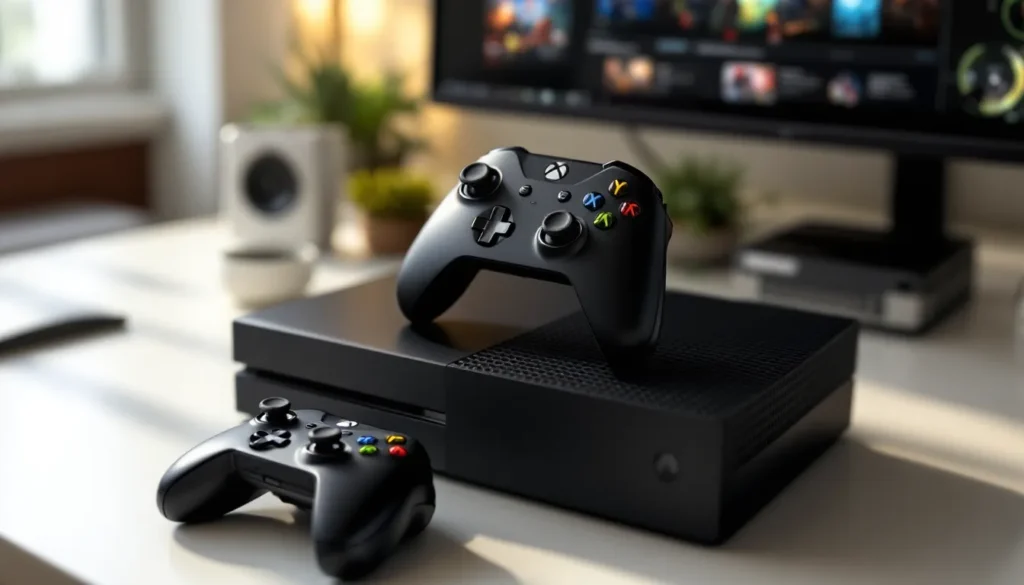
System requirements are straightforward: any Xbox One model runs Battlefront, though performance varies slightly. The base Xbox One S handles the game at 1080p/60fps, while the Xbox One X pushes to 4K/60fps. If you’re playing on the original Xbox One, expect 900p/60fps. Frame rate is consistent across all models, which matters for competitive play. A stable 60fps makes aiming and reaction times predictable, so whether you’re on base hardware or premium gear, you’re getting a fair experience.
Internet connection is essential, minimum 10Mbps download speed is recommended for smooth online play. A wired Ethernet connection will give you more stable pings than WiFi, which becomes noticeable during intense firefights. If you’re experiencing lag or packet loss, switching to wired is the first troubleshooting step to try.
Make sure your Xbox Live Gold subscription is active. Battlefront requires Xbox Live to access multiplayer, though single-player campaigns and some offline modes work without it. If you’re on Game Pass Ultimate, you’ve already got Gold included, so you’re covered. Launch the game, select your difficulty preference for AI-controlled matches, and you’re ready to drop into your first battle. Don’t worry about being rusty on your first few matches, matchmaking does its job, and you’ll quickly find your footing.
Essential Tips For New Battlefront Players
Mastering Blaster Combat And Precision Shooting
Blaster accuracy is your foundation in Battlefront. Unlike some arcade shooters, your shots have bullet drop and travel time, especially at range. The closer you are to an enemy, the more forgiving bloom becomes, but at distance, you need to lead your shots slightly and account for weapon recoil. Most starter weapons have reasonable stability, so focus on clicking heads rather than spraying.
ADS (Aim Down Sights) is crucial but comes with a tradeoff, you move slower while ADS, making you vulnerable to flanking. Use ADS for medium-to-long range engagements where precision matters. In close-quarters combat, hip-fire is often faster, especially if you’re strafing. Learn the optimal range for your weapon: blaster rifles excel at medium range (15-30 meters), while shotguns are lethal up close but useless beyond 10 meters.
Recoil control is learnable and muscle-memory based. Each weapon has a distinct recoil pattern. Spend 15 minutes in a solo match against bots to familiarize yourself with how each gun handles. The E-11D (standard trooper rifle) has predictable upward recoil, while the CR-2 favors tight hip-fire spread. Once you internalize these patterns, consistency improves dramatically.
Don’t chase kills across open terrain. Battlefront punishes overextending. Instead, hold strong positions near objectives, use cover effectively, and let enemies come to you. If you’re dying frequently to headshots, you’re probably not using cover correctly, peak corners, engage from behind objects, and minimize your exposure window.
Effective Hero And Villain Strategies
Heroes are game-changers, but only if played intelligently. When you spawn as a hero, your primary goal is objective control, not killstreaks. If your team is fighting for the objective, use your hero ability to secure it. Luke’s Force Push can clear a point, while Vader’s Force Choke removes specific threats. Spamming abilities without purpose wastes your hero timer.
Understand your hero’s strengths and weaknesses. Melee-focused heroes like Maul excel in close quarters but struggle against coordinated blaster fire from range. Ranged heroes like Leia have more flexibility but lower health pools. Play to your hero’s archetype: if you’re Boba Fett, hunt isolated players and high-value targets. If you’re Chewie, stay with your team and provide support.
Hero survival is critical. A dead hero is 10 seconds of lost momentum for your team. Don’t 1v3 a squad expecting to win. If you’re low on health, back up, use your ability defensively if needed, and let teammates support you. Many new players treat heroes as invincible, they’re not. They’re strong, but coordinated blaster fire drops them quickly.
When facing an enemy hero, focus fire as a team. A single blaster can’t threaten a hero alone, but three can eliminate them in seconds. Communication matters here. Even without voice chat, positioning yourself near teammates signals that you’re grouping up. Don’t let a hero roam uncontested.
Map Knowledge And Tactical Positioning
Each Battlefront map has geography that favors certain tactics. High ground is universally valuable, angles from above are harder to counter. If you control the elevated terrain on a map, you control sightlines and can focus fire on advancing enemies. Conversely, if you’re pushing uphill, you’re exposed and vulnerable.
Choke points are objective-centric. Every map has 2-4 areas where fights naturally converge. Knowing these choke points means you can predict where enemies funnel and pre-aim accordingly. On Hoth, for example, the final objective is typically a tight corridor. Teams that position early behind cover and pre-aim the entrance win the fight before it starts.
Flank routes matter enormously. Every major objective has secondary paths. If your team is locked in a frontal assault, flank routes let you attack from unexpected angles, split enemy focus, and isolate weak players. Learning these alternative paths, and denying them to enemies, is what separates competent players from mediocre ones.
Resource awareness includes understanding spawn behavior. When you die, you respawn at a friendly objective or flag. Enemies know this. If your team loses an objective, you’ll respawn further away, giving enemies time to entrench. Defending objectives aggressively prevents this stagger. Conversely, if you’re attacking and take an objective, holding it gives your team better spawn positions for the next push.
Use your mini-map constantly. It shows teammate positions, nearby enemies, and objective status. A quick glance every 3-5 seconds prevents surprises and helps you coordinate with teammates. If you see three teammates pushing a flank, reposition to support them. If the map shows no teammates defending your rear objective, rotate back to defend.
Game Modes Explained: Which Mode Is Right For You
Multiplayer Matchmaking And Competitive Play
Battlefront’s multiplayer modes range from casual objective-focused battles to ranked competitive arenas. Galactic Assault is the flagship mode, it’s 20v20 large-scale warfare with dynamic objectives that shift throughout the match. Teams push toward enemy territory, defending or attacking specific targets. It’s accessible for new players because the 40-player population means individual performance matters less than in smaller modes. Even if you’re having an off game, 39 teammates provide cover.
Supremacy is similar in scale but removes the attacking-defending asymmetry. Both teams fight over central command posts in a symmetrical setup. This mode punishes camping because the action revolves around specific positions that rotate. Supremacy is excellent for learning pure gunplay and team coordination without the pressure of asymmetrical objectives.
Blast shrinks the mode to 8v8 team deathmatch on small maps. It’s raw competitive gunplay with no objectives. Every kill matters, positioning is tight, and your individual skill is on full display. If you’re trying to improve your aim and reaction time, Blast is perfect. Heroes spawn less frequently, so it’s pure blaster combat.
Onslaught is Battlefront’s co-op mode against AI. You and up to three teammates fight waves of increasingly difficult enemy bots on a smaller map. It’s great for warming up before jumping into multiplayer, learning map layouts without pressure, or grinding credits if you want to avoid PvP temporarily.
Ranked mode exists for competitive players. You’ll face balanced opponents within your skill tier, and ranks are transparent, Diamond, Master, and Grandmaster separate the elite from everyone else. Ranked has stricter rules (no heroes in some variants) and rewards rank-exclusive cosmetics. Pure Xbox One Archives users might notice that ranked tends to fill slower during off-peak hours, so queuing during evening peak times (7-11 PM) ensures faster matches.
Matchmaking generally works well. You shouldn’t run into Grandmaster players in casual modes, and ranked queues you against appropriate competition. But, population ebbs and flows, during peak hours (evenings, weekends), you’ll find matches instantly. Off-peak hours might require 2-3 minute queues.
Single-Player Campaigns And Story Content
Battlefront’s single-player Campaign follows Iden Versio, an Imperial special forces commander, across multiple missions. It’s a solid 5-6 hour story that bridges the original trilogy and newer films. Campaign missions teach mechanics in controlled environments, so it’s valuable for learning before jumping into multiplayer chaos.
The campaign difficulty scales from easy (forgiving, scripted encounters) to hard (enemy AI reacts intelligently, flanks effectively, demands precise aim). Playing on hard difficulty prepares you better for multiplayer because enemy patterns become less predictable. You’ll encounter hero characters in specific missions, showing how they function against your blaster fire.
Beyond campaign, Arcade Mode offers offline matches against AI bots on any multiplayer map. You can customize player counts, difficulty, and team composition. Arcade is your sandbox, want to practice on Hoth with 10v10 bots? Done. Want to challenge yourself on hard difficulty with fewer allies? Available. It’s perfect for grinding credits passively, learning maps without judgment, or practicing specific loadouts.
Custom Games are the ultimate training ground. Rent servers (if available in your region) or create private lobbies with friends. You control every variable: map, mode, teams, AI behavior, hero availability. If you’re grinding skill, custom games against difficult bots is underrated. You can identify weak spots in your gameplay without the pressure of real players watching.
The story content is canon and worth experiencing for Star Wars fans, but mechanically, the multiplayer modes offer the most long-term value. Campaign is a one-time playthrough: multiplayer is infinite.
Building Your Loadout: Classes, Weapons, And Customization
Top Weapon Recommendations For Each Playstyle
Battlefront has four main trooper classes, each with distinct playstyles and weapon pools. The Assault class excels at aggressive frontline combat with medium-range weapons and high health. The E-11D is the all-rounder, solid at any range, forgiving recoil, easy to control. The CR-2 is a close-range laser, tight hip-fire spread, brutal if you stick to corridors. Choose Assault if you’re pushing objectives and soaking fire.
The Heavy class trades mobility for firepower and shields. Their minigun (the T-21) outputs massive sustained damage, perfect for suppressing enemy advances. Heavies excel at holding positions and melting grouped enemies. The FWMB-10K is a slower, harder-hitting cannon, one shot kills lightly armored opponents at close range. Use Heavy to anchor defensive positions.
The Specialist class plays at range with sniper rifles and tactical abilities. The A280-CFE is a mid-range blaster that rewards accuracy. The NT-242 is the sniper, one headshot kills unshielded opponents, but recoil is punishing and slow rate of fire demands patience. Specialist excels in maps with sightlines (Hoth, Tatooine). Avoid Specialist if you’re learning basic gunplay: the learning curve is steeper.
The Officer class is support-focused with the SE-44C, a precise close-to-medium range blaster. Officers can call in squad buffs and orbital strikes. The SE-44C demands accuracy but rewards disciplined players with reliable kills. Officer is underrated for competitive play because squad buffs stack team advantage significantly.
Weapon attachment customization is straightforward: scopes (for range), cooling systems (reduce overheat), or rate-of-fire mods depending on playstyle. A beginner should stick with standard attachments until comfortable. Advanced players optimize, a sniper might equip a long-range scope, while a close-quarters Assault favors hip-fire mods.
Star Cards (ability loadouts) define how your class functions. Damage boosts increase blaster output, health recovery extends survival, and utility cards (spotting, radar jamming) provide tactical advantages. New players should equip cards that synergize: if you’re playing Assault, pair aggressive damage mods with cards that extend survivability. Don’t randomly mix abilities, coherent loadouts maximize effectiveness.
The meta shifts with patches, but as of early 2026, the E-11D remains the most balanced all-purpose choice. The CR-2 is terrifying in skilled hands. The NT-242 sniper is lethal but requires aim discipline. No weapon is objectively “best”, your comfort and playstyle matter more than raw stats.
Optimizing Controller Settings For Competitive Edge
Controller sensitivity dramatically impacts your performance. High sensitivity (12-15) lets you whip around quickly, essential for fast-paced Blast modes. Low sensitivity (3-8) helps with precision ADS aim, crucial for long-range engagements and sniper play. Most players land somewhere in the middle (8-11) as a compromise. Experiment in Arcade mode to find your sweet spot.
ADS sensitivity separately controls zoom-in aim. Many competitive players set ADS lower than normal sensitivity, allowing slow, precise tracking when scoped. This decoupling takes practice but pays off, you’ll notice a difference in headshot consistency within a few sessions.
Deadzone settings (the threshold before input registers) matter on worn controllers. Higher deadzone (15-20%) filters out stick drift but feels sluggish. Lower deadzone (5-10%) is responsive but exacerbates controller degradation. If your stick drifts, increase deadzone: if you need precision, lower it carefully.
Button mapping is personal preference. Some players rebind jump to a paddle (using an Elite controller) to jump without losing aim stick control. Others remap abilities to bumpers for faster ability usage. Standard Xbox One controller lacks advanced options, but muscle memory with default buttons is totally valid.
Vibration feedback should be enabled, subtle haptic cues signal damage taken and help with spatial awareness. Disable vibration only if your controller is malfunctioning (excessive rumbling is a hardware issue, not a tuning problem).
The Pure Xbox community frequently shares controller optimization discussions, and many competitive players detail their exact settings. Finding a pro player whose playstyle matches yours and copying their settings is a shortcut to faster improvement. Within a week or two, adjusted settings become second nature.
Advanced Strategies And Pro Player Techniques
Professional Battlefront players have distinct habits that separate them from casuals. First, they don’t chase kills, they chase objectives. A kill at the wrong moment is wasted. A well-timed kill on a player defending the objective removes resistance and lets your team push. Pros constantly ask “where is my team” and “where do we need to be next.” Individual skill matters, but game sense (understanding win conditions and timing) matters more.
Pre-aiming is a mechanical skill that looks subtle but impacts survival dramatically. Instead of running around and reacting to enemies, pros pre-aim common enemy positions. If you’re approaching a choke point, aim chest-height where enemies’ heads appear. If an enemy rounds a corner, your crosshair is already there. This eliminates reaction time and gives you the first-shot advantage.
Ammo discipline sounds boring but wins close fights. Your blaster overheats if fired continuously. Smart players fire in bursts, 3-5 shots, brief pause for cooldown, repeat. This prevents overheat mid-firefight and keeps your weapon ready when enemies push. Panicked new players hold trigger indefinitely, overheat, and die helplessly. Discipline beats panic.
Hero usage at the professional level is calculated. You don’t spawn a hero immediately: you hold the token. You use it when your team commits to the objective. Feeding a hero pointlessly (dying carelessly) is worse than not using it at all. Pros time hero usage to swing decisive team fights, not to pad scoreboards.
Positioning evolves as you improve. Beginners run toward enemies. Intermediate players find cover and hold positions. Pros consider elevation, angle advantage, and rotation. They play from terrain that gives vertical or angle superiority, fight from spots that allow quick retreat, and constantly think three positions ahead. If your current position becomes unfavorable, you’re already rotating to the next one before enemies realize you’re leaving.
Map control is a macro concept, hold high-value terrain, force enemies into unfavorable positions, deny them resources (health pickups, power-up spawns). The team that controls the map’s best real estate usually wins because they dictate engagement terms. Watch professional Battlefront streams and notice how they congregate on specific map sections. That’s intentional positioning, not random.
Team communication matters even without voice chat. Positioning yourself with teammates sends a message. If you’re weak, stick with two allies. If you’re strong and have good aim, isolate and 1v1 enemy players. Spacing matters, don’t clump (one explosion kills everyone), but don’t spread so far that isolated teammates die without support.
Resourceful players understand ability cooldowns. You’ve got limited grenades, ability charges, and reinforcement callouts. Wasting a grenade on a scout is wasteful. Save it for cluster kills on the objective. Pros use tools precisely because resources are finite and matches are decided by who manages advantages better.
Community, Updates, And What’s Ahead
The Battlefront community on Xbox One remains active and welcoming. The official forums, subreddit (r/StarWarsBattlefront), and Discord servers are hubs for strategy discussion, meme sharing, and player connection. If you’re stuck on something, posting a question yields thoughtful responses from veterans within hours. The community is generally helpful to newcomers, especially compared to other competitive shooters.
Recent patches (as of early 2026) have addressed balance concerns. The NT-242 sniper received a handling adjustment, making it slightly less forgiving but more rewarding for disciplined players. The E-11D assault rifle got minor tweaks but remains meta-dominant due to versatility. Heavy class received a shield durability buff, making them harder to burst down in team scenarios. These balance shifts mean loadout recommendations change, but core strategies remain stable.
Seasonal updates introduce new maps, cosmetics, and limited-time events. Geonosis recently returned as a seasonal map, and it’s become a community favorite due to sightline variety and distinct playstyles it enables. New cosmetics (character skins, weapon camos) are purely cosmetic, so paying players don’t gain advantages, a refreshing stance in modern multiplayer games.
Game Pass inclusion means the player base refreshes regularly. New players discover Battlefront monthly, ensuring populated matchmaking and fresh competition. If you’re afraid of “dead game” status, don’t be. Xbox integration keeps the game alive indefinitely.
Looking ahead, community wishlists circulate frequently. The Loadout regularly publishes what players hope to see next: new heroes, balance adjustments, gameplay refinements. The development team listens to feedback, though updates come slowly compared to live-service juggernauts. Patience is required, but changes feel meaningful when implemented.
Competitive tournaments occasionally spring up through community organizers. Prize pools are modest compared to mainstream esports, but the competitive scene exists if you want to test yourself. Xbox-specific tournaments sometimes feature Battlefront brackets, and many competing players hone skills on this exact platform before moving to other titles.
The longevity question is answered: Battlefront’s 2026 state is stable. It’s not growing explosively, but it’s not dying. The dedicated player base is satisfied with the current state, patches maintain balance, and new content trickles in regularly. If you’re considering jumping in, the timing is perfect, you’re joining an established community with deep knowledge and established meta that you can learn from. Check IGN for the latest news on updates and community events if you want to stay current.
Conclusion
Star Wars Battlefront on Xbox One is a deceptively deep multiplayer experience hiding behind approachable mechanics. Your first hours will feel chaotic, enemies seem to know the maps better, their aim is sharper, and objectives blur together. That’s normal. By your tenth hour, patterns emerge. By your hundredth hour, you’re making decisive plays and understanding how micro decisions cascade into map control and victory.
The game rewards fundamentals: solid aim, intelligent positioning, objective awareness, and team coordination. It doesn’t punish you for being new, but it does reward you for improving. The Star Wars aesthetic is the hook, but the tight gunplay and strategic depth keep players coming back.
Start with Arcade mode solo matches to learn weapons without pressure. Graduate to casual multiplayer modes where mistakes are cheaper. Gradually push toward ranked and higher-difficulty modes as confidence grows. Most importantly, focus on one playstyle initially, pick one class, one weapon, and master that combination before branching out.
The community is active, patches maintain balance, and game availability through Game Pass means you can try it risk-free. If multiplayer shooters appeal to you and you appreciate Star Wars, Battlefront deserves your time. Jump in, grab that hero token, and may the Force be with you.