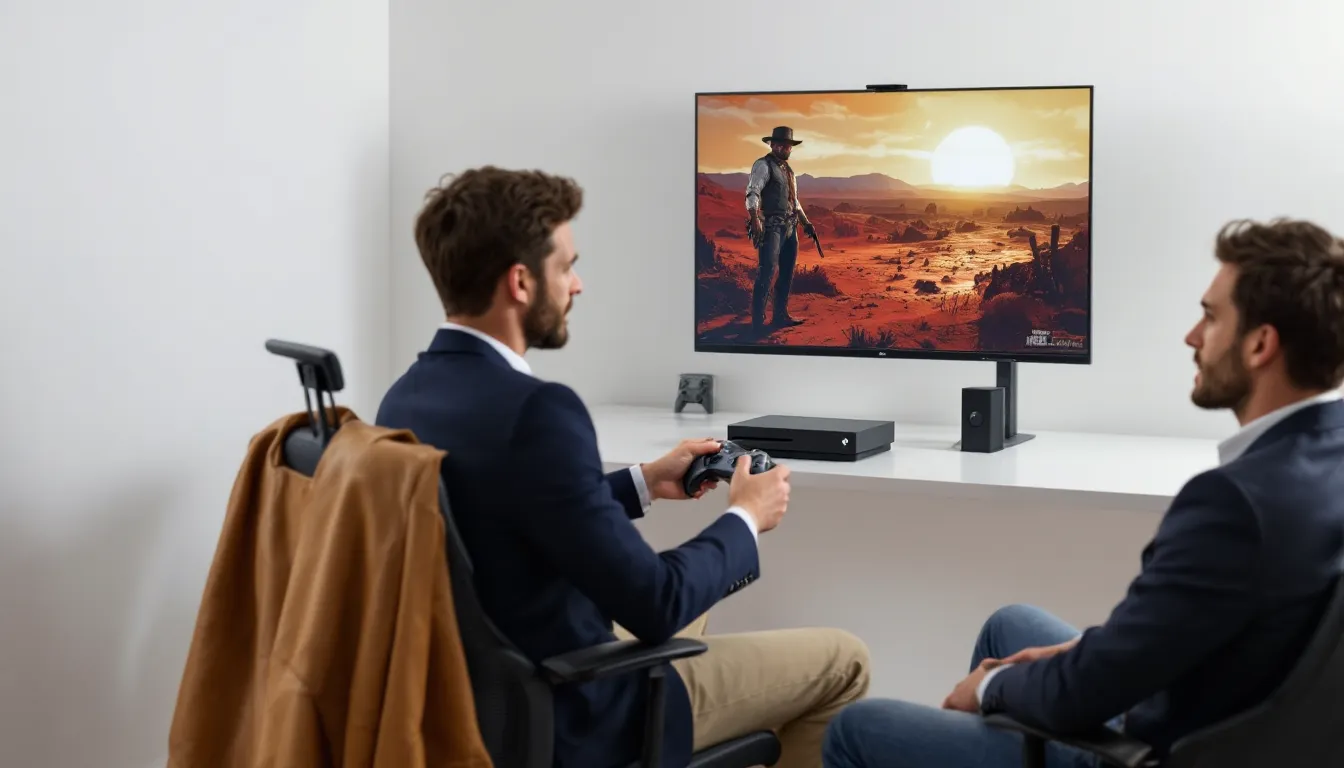

Red Dead Redemption on Xbox One remains one of gaming’s most immersive Wild West experiences, and for good reason. Whether you’re a completionist chasing 100% achievements or a casual player looking to soak in Rockstar’s frontier storytelling, the game demands respect and rewards exploration. With backwards compatibility on current Xbox hardware, new and veteran players alike can experience this classic sandbox without needing last-gen consoles. This guide covers everything, from understanding the different versions available to mastering advanced gameplay mechanics, so you can get the most out of your Red Dead Redemption experience on Xbox One in 2026.
Table of Contents
ToggleKey Takeaways
- Red Dead Redemption on Xbox One is fully playable through backwards compatibility with enhanced graphics on Xbox One X, offering a tighter, faster-paced alternative to Red Dead Redemption 2’s 40-60 hour experience with a 20-30 hour campaign focused on John Marston’s story.
- Master the Dead Eye slow-motion mechanic by holding Right Trigger while aiming to lock onto multiple enemies with precision, combined with cover-based combat and weapon variety to excel in the game’s arcade-style gunfights.
- Side quests and stranger encounters offer rewarding optional content that reflects your Honor level, provide substantial income through bounties and treasure hunts, and flesh out the world beyond the main story missions.
- Achieving 100% completion requires earning all 50 achievements across story missions, challenge-based tasks like Sharpshooter and Survival Challenges, and multiplayer milestones—easily done with strategic mid-game saves for grinding.
- The game demands only 5-7 GB of storage space and works offline for single-player, making Red Dead Redemption a cost-effective bargain (typically $5-15) that preserves gaming history as a landmark 2010 title that created the open-world Western template.
- Address common technical issues like crashes through clean reinstalls, audio glitches by toggling Dolby Atmos, and online lag by using an Ethernet connection, ensuring stable performance across Xbox One hardware.
Understanding Red Dead Redemption’s Xbox One Versions
Red Dead Redemption vs. Red Dead Redemption 2: What’s the Difference?
Let’s cut straight to it: these are two very different games. Red Dead Redemption (2010) and Red Dead Redemption 2 (2018) operate in separate time periods, with distinct mechanics, graphics, and gameplay philosophies. The original Red Dead Redemption follows John Marston in a more streamlined Western narrative, while RDR2 is a prequel featuring outlaw Arthur Morgan with far more granular detail, dual-wield combat options, and a massive world packed with dynamic events.
The original game runs at a lower resolution and frame rate than RDR2, but it’s faster-paced and less demanding on hardware. If you’re playing on an Xbox One S or X, backwards compatibility handles the upscaling automatically. The story of the original is tighter, roughly 20-30 hours for the main campaign versus RDR2’s 40-60 hour sprawl. Gameplay-wise, the original features simpler mission design, limited character customization, and a smaller map focused on the American frontier and Mexico. RDR2 introduces stamina systems, detailed weapon mechanics, and a living, breathing world with stranger encounters at every turn.
Choosing between them depends on what you want: tight storytelling and arcade-style gameplay, or immersion in a fully realized 1911 world. Both are exceptional, but they’re fundamentally different experiences.
How to Play the Original Red Dead Redemption on Xbox One
Red Dead Redemption is playable on Xbox One through backwards compatibility, no disc swaps or emulation required. If you own the physical copy or digital version, launch it directly from your library. The system automatically applies enhancements like 4K resolution on Xbox One X and faster load times compared to the original Xbox 360.
To download it: Navigate to the Xbox Store, search “Red Dead Redemption,” and purchase or check if you already own it through Game Pass or a previous purchase. Installation takes roughly 5-7 GB of storage. Once installed, it’ll run with Xbox One native features like auto-saving to the cloud and full achievement tracking.
One critical note: online multiplayer servers remain active, so you can jump into Red Dead multiplayer matches, but the player base is significantly smaller than RDR2’s. If you’re primarily interested in story and single-player content, that’s where the real meat is anyway. The backwards compatibility version also benefits from Play Anywhere licensing if you own it on Windows, meaning you can play on both console and PC with a single purchase. Load times are noticeably faster than running it on older hardware, though not as instant as the newer generation consoles would handle a native title.
Getting Started: Essential Tips for New Players
Character Controls and Combat Mechanics
The combat system in the original Red Dead Redemption revolves around Dead Eye, the game’s signature slow-motion mechanic that lets you lock onto multiple enemies with precision. Unlike RDR2’s more simulation-heavy approach, the original feels snappier and more arcade-like. To activate Dead Eye, hold the Right Trigger while aiming: your vision shifts into a desaturated slow-motion state where you can target critical areas or multiple foes.
Basic gunfighting breaks down like this: tap the Right Trigger to fire, press Right on the D-Pad to draw your weapon (essential for duels), and use the Left Analog Stick to aim. Melee combat is simpler, just button-mash the Right Bumper to punch or slash. Cover is your friend in gunfights: snap to cover by pressing X near walls or barrels, then blind-fire over the edge or lean out for aimed shots.
Weapon selection matters. Revolvers like the Cattleman Revolver are fast and reliable: shotguns like the Combat Shotgun devastate at close range: rifles like the Springfield Rifle excel at range. Each weapon type has different reload speeds and damage profiles. You’ll need to experiment to find your preferred loadout, and the game lets you carry multiple weapons simultaneously.
Melee weapons include knives, machetes, and dynamite for explosive situations. One often-overlooked tactic: equip the Tomahawk or Throwing Knife for silent kills on lone enemies. This is crucial for side missions where maintaining a low profile keeps your Honor rating high.
Navigating the Wild West: Map Basics and Travel
The world spans two main regions: New Hanover and West Elizabeth in the American frontier, plus Mexico accessed later in the story. Unlike RDR2, fast travel isn’t seamless, you’ll rely on stagecoaches at camps and train stations to jump between regions quickly. On foot or horseback, plan your routes carefully, especially in the early game when you lack fast travel options.
Horses are essential. Your current horse (assigned at the start) isn’t as customizable as RDR2’s mounts, but it’s crucial for traversal. Press Y to call your horse from distances, though it takes a moment to arrive. Ride by holding Right Trigger and steering with the Left Analog Stick. Learn to lasso enemies by pressing LB mid-gallop, this disables targets without firing a shot, useful for bounty missions.
The map legend shows mission markers, homesteads, towns, and points of interest. Yellow mission markers indicate story objectives: stranger encounters appear dynamically as you roam. Camps scatter throughout the map where you can rest (advancing time to replenish stamina) or cook food for health recovery. Towns like Blackwater, Thieves Landing, and San Fierro offer shops, saloons, and NPCs with side work.
Always keep an eye on your mini-map in the corner, it updates your position and shows nearby threats. Red dots indicate enemies: white dots are friendlies. Learning patrol routes of law enforcement helps you avoid wanted levels when pursuing missions that demand stealth or discretion.
Money, Resources, and Economy Management
Cash is king in Red Dead Redemption. You earn it through story missions, side jobs, gambling, bounty hunting, and looting defeated enemies. Early game money is tight, so prioritize missions that pay well and avoid wasteful spending on ammunition or supplies you can loot from bodies.
The economy revolves around a few key activities:
Mission Rewards are your primary income. Main story missions pay 100-500 dollars depending on complexity: stranger encounters and side quests offer 10-100 dollars. Always complete optional mission objectives (marked with gold stars) to earn bonus payouts.
Bounties are lucrative. Visit sheriff’s offices to accept bounties on criminals. Alive bounties pay more than dead ones, so lasso targets instead of lethal force when the contract allows. A single high-level bounty nets 100+ dollars.
Gambling at poker tables, blackjack, and liar’s dice is risky but potentially rewarding. Win streaks can net 200+ dollars, but losses drain your wallet fast. It’s not recommended for cash-strapped players, but once you’re flush, it’s entertaining.
Looting corpses and searching buildings yields cash, ammo, and supplies. Don’t ignore dead bodies after firefights, even 2-5 dollars adds up. Valuables like pocket watches and jewelry can be sold to fences for decent money.
Animal Hunting is secondary income. Hunt deer, elk, and rabbits for pelts and meat that sell to general stores. It’s tedious early on but generates steady income without mission involvement.
Manage your spending: ammo is cheap (1-3 dollars per batch), healing items like whiskey and medicine cost 1-5 dollars, and horse care runs minimal. Avoid gambling or frivolous purchases until you’re comfortable with cash flow. Once you hit 3,000 dollars, you’re financially stable for the campaign’s duration.
Mastering the Story: Campaign Progression and Missions
Main Story Missions and Objectives
Red Dead Redemption’s campaign spans roughly 20-30 hours and follows John Marston’s journey from outlaw to reluctant lawman as he hunts down his former gang members. The narrative is structured in chapters, with each delivering story beats that escalate tensions and develop characters.
Main story missions are scripted, linear experiences where failure means restarting. Unlike some modern games, RDR doesn’t offer branching narratives, you follow the rails Rockstar lays. That said, the presentation is cinematic and engaging. Missions include shootouts, horseback chases, stealth sections, and dialogue-heavy scenes that flesh out Marston’s motivations and relationships.
Key objectives appear in gold text on-screen: failing them (like getting too far from mission boundaries or alerting enemies when stealth is required) restarts the mission. This can be frustrating, but it forces engagement rather than autopilot gameplay. One strategic tip: before starting a mission, check your supplies. Stock up on ammo, health items, and ensure your weapons are repaired. A well-supplied player rarely struggles with story missions.
Mission design evolves as the game progresses. Early missions teach mechanics: mid-game missions test your combat skills in complex scenarios: late-game missions feature elaborate set pieces and emotional payoffs. The pacing is deliberate, Rockstar expects players to absorb narrative between action sequences.
Throughout the campaign, you’ll encounter checkpoints and safe houses where you can sleep to restore health and stamina. Use these strategically, especially before difficult mission chains. Some missions unlock new weapons or abilities: completing them fully (gold objectives) nets achievements and unlocks.
Side Quests and Stranger Encounters
Strangers are Red Dead’s bread and butter for optional content. These NPCs appear on your map and offer spontaneous work, rescue a damsel, hunt a target, retrieve stolen goods. Each stranger has a unique story, and the writers milk these encounters for character and humor. A drunken inventor, a traveling salesman, a frontier hermit, the cast is memorable.
Strangers work differently than missions: failure doesn’t restart them. If you accidentally shoot a target or mess up, you can reload or simply move on. This freedom makes stranger encounters feel less rigid than story missions. Some are one-offs: others span multiple encounters, building narratives as you meet the same character repeatedly across the map.
Side quests include hunting contracts, treasure hunts, and specific character arcs. The Treasure Hunt lines are particularly rewarding, follow maps and clues to hidden caches of gold and cash. Hunting contests pit your rifle skills against wildlife: excel and you’ll earn cash and weapon unlocks.
One mechanical note: Strangers often reflect your Honor level. High Honor (good deeds, helping NPCs) unlocks certain encounters and dialogue options: Low Honor (killing innocents, theft) opens darker paths. Neither locks you out completely, but they create thematic differences in how NPCs interact with you. If you’re chasing 100%, you’ll need to experience both paths, meaning multiple playthroughs or strategic mid-game saves.
Strangers respawn, so you can repeat profitable encounters if you’re grinding cash. Some veteran players exploit specific high-paying stranger encounters for efficient income.
Unlocking Achievements and Completing 100%
Achievements in Red Dead Redemption span story completion, challenge mastery, and miscellaneous milestones. There are 50 achievements total on Xbox, with gamerscore ranging from 10 to 40 points each. Hitting 100% completion requires focused effort but is entirely doable in a single or second playthrough.
Story achievements unlock automatically: “Endless Summer” for completing Act 1, “Best in the West” for finishing the campaign, and character-specific ones like “Gunslinger” for completing all gunslinger stranger encounters. These are story-gated and unavoidable if you’re following the narrative.
Challenge achievements demand specific skills. Sharpshooter Challenges test weapon proficiency: shoot targets from horseback, hit headshots, rapid-fire accuracy. Survival Challenges require hunting specific animals and gathering materials. Combat Challenges pit you in duels or gang firefights with escalating difficulty. These are grindable, you can attempt them repeatedly until you nail the requirements.
Miscellaneous achievements include “Artificial Intelligence” (collect all cards in Poker and Liar’s Dice), “Extreme Personality” (reach maximum or minimum Honor), and “Friends With Benefits” (complete a certain number of stranger encounters). Some are time-sinks: others require strategy or skill.
Pro tip for 100%: Don’t obsess over achievements during your first playthrough. Experience the story naturally, then reload a late-game save and grind challenges. Alternatively, use New Game+ modes if available. The game’s structure rewards replaying, new dialogue and alternate mission approaches emerge on second runs.
For completionists, tracking tools exist online (GamesRadar+ offers comprehensive achievement guides) that list every unlock condition, removing guesswork. Plan your playthrough around these guides if achievement hunting is your goal.
Advanced Gameplay and Optimization
Performance Settings and Graphics Options
On Xbox One, Red Dead Redemption runs at 720p at 30 fps (upscaled to 1080p on Xbox One S and 4K on Xbox One X). These are backwards-compatibility defaults: you can’t manually adjust resolution or frame rate in-game. But, Xbox system settings offer some control over how the game behaves.
For Xbox One X users specifically, the enhanced version leverages the hardware’s grunt for sharper visuals and reduced pop-in of distant objects. The difference is noticeable compared to standard Xbox One, though not as dramatic as comparing original RDR to RDR2. Load times on Xbox One X are faster, typically 30-45 seconds from menu to in-game versus 60+ seconds on base Xbox One.
One crucial setting: Motion Blur. If you find the default motion blur distracting (common in older games), some Xbox accessibility settings let you adjust frame pacing and smoothing. Navigate to Settings > Display & Sound > Video Modes to toggle these options, though actual in-game graphics sliders are unavailable.
Another consideration: Storage. Red Dead Redemption demands roughly 5-7 GB of SSD space. On a full Xbox One with limited storage, you might need to uninstall other games to make room. Consider external USB storage if you’re juggling multiple titles. Installation and load times improve marginally on internal SSD versus USB.
Graphical quality remains consistent regardless of platform, the game looks dated by 2026 standards compared to RDR2 or modern AAA releases. Textures are lower resolution, character models are less detailed, and environmental draw distance is shorter. This isn’t a knock: it’s context. The original was designed for 2010 hardware. On modern consoles, it’s a trade-off between presentation and performance, the game runs smoothly because it’s not taxing cutting-edge visuals.
For streaming or recording, Xbox One captures up to 1080p video of gameplay. If you’re content creating, capture the highest-resolution version available on your specific Xbox model for best results.
Multiplayer Features and Online Play
Red Dead Redemption features online multiplayer modes separate from the single-player campaign. Available modes include Free Roam (open-world exploration with other players), Team Deathmatch, Hold Your Own (king-of-the-hill variant), and various objective-based modes. The multiplayer server infrastructure is maintained by Rockstar, though the player base is significantly smaller than RDR2’s.
Matching is peer-to-peer in many modes, meaning connection quality depends on other players’ internet. Expect occasional lag or disconnections, especially in less-populated sessions. Popular modes like Free Roam tend to have more stable connections than niche game types.
Progression in multiplayer is separate from single-player. Completing matches earns experience and cash, which unlock weapons, clothing, and character customization. The economy mirrors single-player, money is tight early on, so grind a few matches before splurging on cosmetics.
One caveat: Red Dead Redemption’s multiplayer is showing its age. The community is far smaller than RDR2, and queue times for specific modes can exceed 2-3 minutes. If you’re expecting a robust competitive scene, you’ll be disappointed. But, if you want casual online gunfights and exploration with friends, it delivers. Playing with friends in Free Roam is the best experience, private sessions minimize lag and trolling.
Achievements have multiplayer components. “Endless Summer” and “Living Legend” require online play milestones. Plan to spend 3-5 hours in multiplayer if you’re targeting 100% achievements. Alternatively, find a quiet server and grind methodically.
One final note: servers could theoretically be shut down by Rockstar at any time, though no announcement has been made as of 2026. Purchase the game primarily for single-player: treat multiplayer as bonus content. IGN maintains updated information if you need current status.
Best Practices for Xbox One Performance
Common Issues and Troubleshooting
Red Dead Redemption is generally stable on Xbox One, but occasional issues crop up. Here are the most common problems and fixes:
Frequent Crashes or Freezing: If the game crashes to the home screen repeatedly, uninstall and reinstall it. Delete the game from your library entirely, then download fresh. Corrupted installation files are the usual culprit. If crashes persist after a clean install, ensure your Xbox system software is fully updated, navigate to Settings > System > Updates. Also, ensure your network connection is stable: poor internet can trigger crashes during loading.
Audio Cutting Out: Occasional audio glitches happen, particularly during intense firefights or cinematic scenes. Try toggling Dolby Atmos off in game settings if available, or adjust audio output in Xbox settings (Settings > Display & Sound > Audio Output). Restarting the console often resolves temporary audio bugs.
Mission Checkpoints Not Saving: If you restart a mission and lose progress, ensure you’ve reached actual checkpoints, these are marked by on-screen prompts. Pausing and returning to menu mid-mission forfeits progress. If autosave fails to trigger after long missions, manually save in-game by sleeping at a safe house.
Online Connection Issues: Lag in multiplayer or disconnections during online play usually stem from network congestion, not the game. Try hardwiring your Xbox to your router with an Ethernet cable instead of WiFi. This dramatically improves connection stability. If problems persist, restart your router and console.
Pop-In and Texture Streaming: The original Red Dead sometimes loads textures slower on base Xbox One, causing blurry environments initially. This is normal and clears within seconds of entering new areas. On Xbox One X, this is minimized due to superior hardware. It’s not a bug: it’s the game’s streaming system at work.
Stuck in Geometry or Falling Through Map: Rare but possible. If your character becomes trapped or clips into the terrain, reload the last checkpoint or restart the mission. These exploits are edge cases and typically don’t occur during normal play.
If none of these steps resolve issues, check the Xbox Support forums or contact Rockstar Support directly via their website.
Storage and Installation Requirements
Red Dead Redemption requires 5-7 GB of available storage on your Xbox One. This is modest compared to modern games (RDR2 demands 150+ GB), so space shouldn’t be a blocker for most players. But, if your Xbox is nearing full capacity, clear other games or use cloud saves to free up room.
Installation time averages 5-10 minutes depending on your internet speed and console hardware. Xbox One X installs faster than base Xbox One due to superior processor speed. Once installed, the game doesn’t require internet to play single-player, offline mode works perfectly if your console is unconnected.
For multiplayer, you’ll need Xbox Live Gold (standard subscription) and a stable internet connection. Expect occasional updates (patches) that range from 50 MB to 500 MB, addressing bugs or balance tweaks. These download automatically if you have auto-updates enabled.
If storage is tight, prioritize other games for deletion. Red Dead Redemption is small enough to reinstall quickly if needed later. Consider external USB storage (minimum USB 3.0 specifications) as a secondary drive, many games play directly from external storage on Xbox One, including Red Dead Redemption.
One strategic note: If you plan to rotate between multiple large games, external storage is worth the investment. A 2-4 TB external drive costs 50-100 dollars and eliminates constant uninstall/reinstall cycles. Red Dead Redemption alone doesn’t justify the expense, but as part of a larger library, it’s practical.
Cloud saves are automatic. Your progress syncs to Xbox servers, allowing you to resume on any Xbox with your account logged in. This is a safety net if your console fails, simply reinstall on a replacement and download your progress.
Why Red Dead Redemption Remains Essential on Xbox One
Red Dead Redemption endures as a landmark title nearly 16 years after release. On Xbox One in 2026, it remains essential for several reasons.
First, narrative mastery. Rockstar’s storytelling is unmatched in the space. John Marston’s journey from outlaw to fugitive to reluctant hero is emotionally resonant and thematically cohesive. The game grapples with mortality, redemption, and the cost of violence in ways few games attempt. If you’ve only experienced RDR2, playing the original fills crucial narrative context, RDR2 is a prequel, but RDR’s story provides thematic closure that enriches both games.
Second, gameplay purity. While the original is less systemic than RDR2, it’s more focused. Mission design is tighter, combat encounters are exhilarating, and the pacing respects player time. There’s no 5-minute animation of looting a body or skinning a corpse, interactions are snappy, letting you stay engaged rather than watching cutscenes. For players fatigued by RDR2’s simulation-heavy design, the original’s arcade sensibilities feel refreshing.
Third, historical significance. Red Dead Redemption effectively created the open-world Western template. Games before it existed in the space (Outlaws and such), but RDR proved a fully realized, immersive frontier world was commercially viable and narratively rich. Playing it is understanding gaming history. Metacritic scores confirm critical consensus, the original averaged 95/100 across platforms, matching many all-time classics.
Fourth, backwards compatibility value. Microsoft’s commitment to backwards compatibility means you can play 2010-era games natively on 2026 hardware. This is historically significant for gaming preservation. Red Dead Redemption works on Xbox One, Xbox Series X
|
S, and Windows through Play Anywhere, that’s remarkable continuity compared to other franchises locked to specific generations.
Finally, cost-effectiveness. Red Dead Redemption is cheap, usually 5-15 dollars on digital stores, sometimes free through Game Pass. For 20-30 hours of expert-level storytelling and gameplay, it’s unbeatable value. Comparing value-per-hour to modern 60-70 dollar releases, RDR is a bargain.
If you haven’t experienced it, Red Dead Redemption is non-negotiable. If you’re replaying it on modern hardware, you’re reminded why Rockstar remains the gold standard in open-world design. On Xbox One in 2026, it holds up remarkably well, and its influence permeates gaming culture. Playing it contextualizes why RDR2 is such a phenomenon and educates you on frontier narratives that influence games today. For any gamer serious about the medium, it’s essential.
Conclusion
Red Dead Redemption on Xbox One offers a complete package: a sprawling, narrative-driven campaign: accessible gameplay that respects both casual and hardcore players: and backwards compatibility that preserves a landmark title for modern audiences. Whether you’re diving in fresh or revisiting Marston’s story, the game demands attention and rewards engagement.
Start with the essentials: master gunplay and Dead Eye mechanics, explore the map methodically, and soak in the story without rushing. Side quests and stranger encounters flesh out the world: don’t skip them. For achievement hunters, plan multiple playthroughs or strategic save-reloading to unlock all 50 achievements. On Xbox One X hardware especially, the enhanced visuals and faster load times maximize the experience.
The game isn’t flawless, mission design can feel rigid, graphics are dated, and multiplayer is a ghost town. But these minor flaws don’t diminish an experience that remains, in 2026, a masterclass in interactive storytelling. Red Dead Redemption defined what open-world Westerns could be, and it still delivers on that promise. Pick it up, immerse yourself in the frontier, and understand why Rockstar games matter.