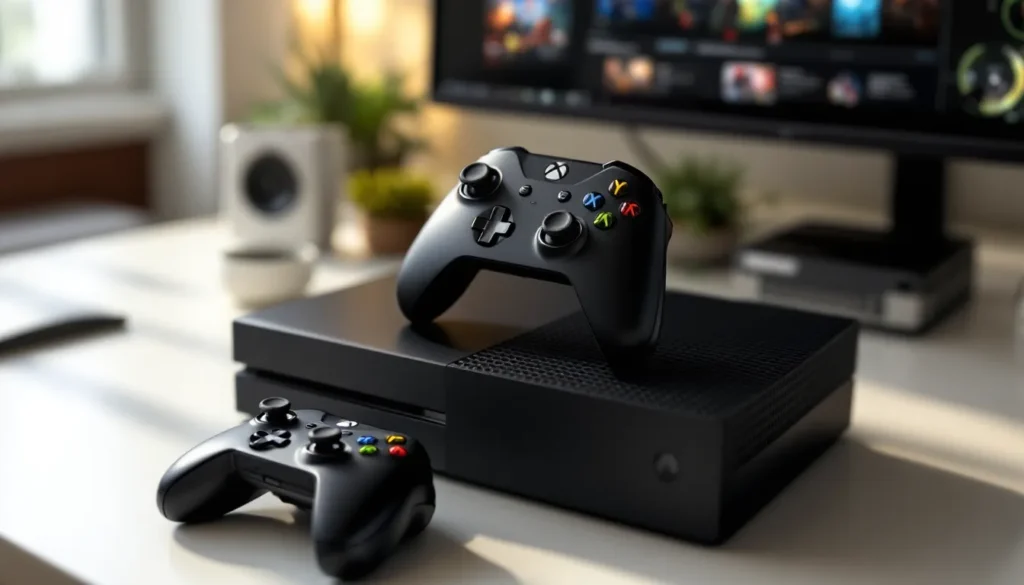

The Xbox One released on November 22, 2013, marking a pivotal moment in console gaming history. Microsoft’s next-generation powerhouse arrived during a heated generational transition, competing directly against the PlayStation 4’s launch just a week earlier. For many gamers, the Xbox One’s debut defined an entire generation of gaming, from its initial controversial features to its eventual evolution into one of gaming’s most versatile ecosystems. Understanding when the Xbox One released and the circumstances surrounding its launch provides crucial context for how it shaped the gaming landscape over the following decade.
Table of Contents
ToggleKey Takeaways
- The Xbox One released on November 22, 2013, in North America, positioning itself as a premium console during a heated competitive launch against PlayStation 4 just one week earlier.
- Microsoft’s initial $499 launch price included the Kinect 2.0 sensor, but the company pivoted to a $399 Kinect-free bundle within months, demonstrating willingness to adapt to consumer feedback.
- The Xbox One faced early controversies over always-online requirements and digital restrictions, but reversing these policies before launch helped reshape consumer perception and set industry standards around player choice.
- Hardware revisions including the Xbox One S (2016) and Xbox One X (2017) expanded the console’s appeal, while Xbox Game Pass transformed its value proposition and became the platform’s most compelling differentiator.
- The console shipped over 50 million units worldwide and fundamentally influenced how the gaming industry approaches subscription services, backward compatibility, and cross-platform integration.
The Original Xbox One Release Date and Launch Details
Global Launch Timeline and Availability
The Xbox One hit shelves on November 22, 2013, in North America, with the console rolling out to Europe and other markets shortly after. The November release window was crucial timing, it positioned the console perfectly for the holiday shopping season, a critical window for hardware sales. Microsoft staggered global availability, with the Japanese market receiving the console later on September 4, 2014, nearly ten months after the North American debut. This phased approach allowed the company to prioritize regions with the strongest expected demand.
Availability at launch was solid but faced some stock constraints due to the aggressive push from both Microsoft and competing consoles. Retailers across North America, Europe, and other territories had units ready for day-one purchases, though Xbox One Archives from Fbcorse documents how inventory levels fluctuated in those early weeks. The staggered release actually worked in Microsoft’s favor, giving the company time to address any immediate technical issues before expanding to new regions.
Launch Pricing and Bundle Options
Microsoft priced the Xbox One at $499 at launch, positioning it as a premium offering in the console space. That price point included the console itself, the Kinect 2.0 sensor, and the Xbox One controller, a bundling strategy that differentiated it from competitors. A few months into the lifecycle, Microsoft adjusted strategy, releasing a Kinect-free bundle at $399, which proved to be a game-changer for adoption rates.
Launch bundles were aggressive and varied by region. In North America, the standard edition included the console, Kinect, a controller, a headset, and a bundled game, typically either Forza Motorsport 5 or Dead Rising 3. Some retailers offered exclusive bundles with additional game titles or accessories. The $499 entry price was steep for 2013, and the decision to force Kinect adoption initially created friction with consumers who weren’t interested in motion controls or camera features.
The Gaming Market Context in 2013
Competitive Landscape at Launch
The Xbox One arrived during one of the most heated console launches in history. The PlayStation 4 released just seven days earlier on November 15, 2013, giving Sony a razor-thin first-mover advantage. Both machines represented a generational leap from the Xbox 360 and PS3, bringing 8GB of unified memory, x86 processors, and the promise of vastly improved graphics. The timing created intense competition from day one, with gaming outlets immediately running head-to-head coverage.
Nintendo’s Wii U was already on the market (launched in 2012), but it occupied a completely different segment focused on motion controls and family gaming. The real battle was between Microsoft and Sony in the premium, core-gamer territory. Early comparisons heavily favored the PS4’s technical specifications, it boasted 1.84 TFLOPS of GPU performance compared to the Xbox One’s 1.31 TFLOPS, and the gap became a recurring point of discussion in enthusiast circles.
The competitive pressure was immediate and intense. According to reporting from Windows Central, the PS4’s performance advantages and Sony’s pro-consumer messaging around used games and digital restrictions gave PlayStation a significant psychological edge during this critical launch window. Microsoft had made controversial decisions around digital ownership and always-online requirements (which were eventually reversed), and these missteps gave competitors ammunition during launch week.
Consumer Reception and Early Controversies
The Xbox One’s launch reception was complicated. While the hardware itself was solid, Microsoft faced a sustained backlash over corporate policies and messaging. The announcement that the console would require internet connectivity for play and would restrict used game sales triggered massive consumer pushback months before launch. When Microsoft eventually reversed these policies in June 2013, before the console even released, it was seen as a necessary damage control measure rather than good design.
Early adopters who purchased the Xbox One generally praised its build quality and controller design. The Xbox One controller was widely considered superior to the PS4’s launch controller, featuring better ergonomics and more refined button response. But, the perception problem lingered. Many potential buyers waited to see if the console would offer compelling exclusive games or features to justify the $499 price and mandatory Kinect bundle.
Kinect adoption was a particular pain point. While the camera had impressive potential for voice commands and fitness tracking, core gamers had little interest in motion controls. The decision to bundle Kinect drove up the price and alienated the competitive gaming crowd who wanted the most powerful machine possible. This friction shaped the first year of the console’s lifecycle significantly, as The Verge reported, the perceived weaknesses in raw hardware power became the narrative Microsoft would fight against throughout the generation.
Xbox One Hardware Specifications and Innovations
Technical Capabilities and Features
The Xbox One launched with an AMD-based system featuring an 8-core x86 processor running at 1.75GHz, paired with 8GB of GDDR5 unified memory. The GPU pushed 1.31 TFLOPS, with 32MB of embedded SRAM for faster memory access. It could output to 4K resolution (though not for gaming initially), supported Blu-ray movies, and included a 500GB hard drive for game storage. These specs were competitive for 2013, though the PS4’s slight performance advantage in GPU power immediately became a talking point.
One of the Xbox One’s most significant innovations was the inclusion of the Kinect 2.0, a massive upgrade over the original Kinect on Xbox 360. The new sensor featured improved depth sensing, better motion tracking, and sophisticated voice recognition. Microsoft positioned Kinect as a core feature that would enable hands-free navigation, voice commands, and gesture controls. Games like Kinect Sports Rivals and Dance Central showed the technology’s potential, but adoption remained niche compared to traditional controllers.
The console emphasized multimedia integration heavily. The Xbox One was marketed as an all-in-one entertainment device, featuring integration with cable TV services and on-demand streaming. The ability to snap apps side-by-side and switch between gaming and media was innovative, though the UI required some learning and the feature set consumed significant system resources. The controller featured integrated haptic feedback and a redesigned d-pad that felt more precise than previous generations.
The Kinect Integration and Voice Control
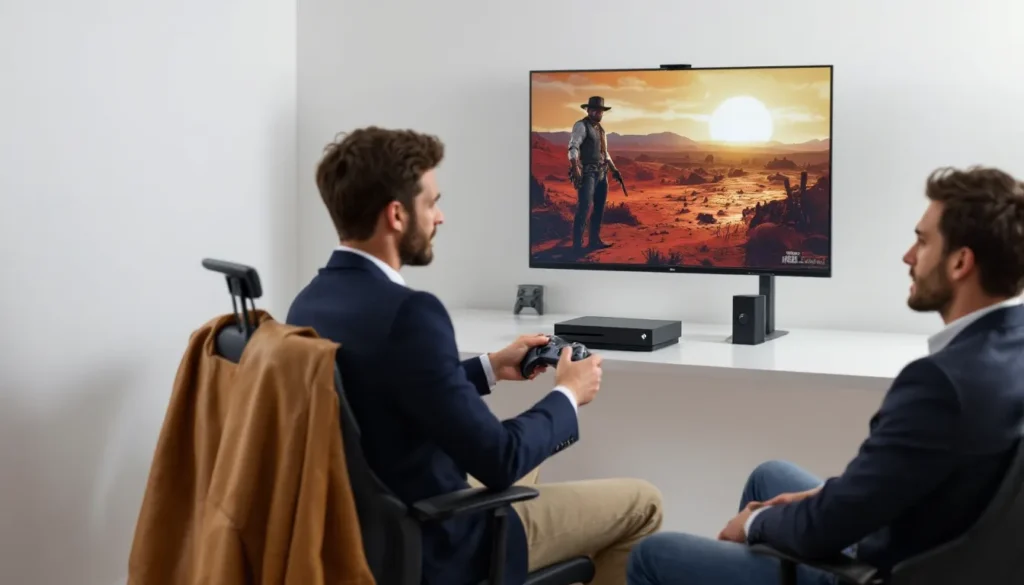
The Kinect 2.0 was supposed to be revolutionary. Microsoft included it with every console at launch and integrated voice commands throughout the operating system. You could say “Xbox, record that” to capture gameplay footage, “Xbox, go home” to return to the dashboard, and “Xbox, play [game name]” to launch titles. For tech enthusiasts, this voice-first approach felt genuinely futuristic in 2013.
But, Kinect’s mandatory inclusion created significant consumer concerns around privacy and surveillance. The camera was always connected, always on, always listening, a marketing message that didn’t resonate well with privacy-conscious gamers. Combined with the always-online requirements that were later reversed, Kinect became a symbol of Microsoft’s perceived overreach. The camera struggled with accuracy in varied lighting conditions, and voice recognition required specific commands rather than natural language processing.
By mid-2014, Microsoft decoupled Kinect from the console, releasing a Kinect-free Xbox One model at $399. This pivot acknowledged that core gamers prioritized performance and gaming experiences over motion-controlled entertainment features. While Kinect continued to have some dedicated fans and found use in education and enterprise settings, its role as a flagship innovation diminished significantly after the first year. The reversal demonstrated how quickly consumer feedback could reshape a console’s identity during its critical launch phase.
Launch Titles That Defined the Generation
Exclusive and Notable Launch Games
The Xbox One’s launch library featured several notable titles, though it wasn’t universally praised. Forza Motorsport 5 was the system’s flagship exclusive, a beautiful racing simulation that showcased the console’s graphical capabilities. It launched as a free-to-play model alongside a premium purchase option, giving players choice in how they approached it. The game looked stunning and performed smoothly, serving as an effective technical showcase.
Dead Rising 3 became another exclusive standout, a zombie-action game featuring hundreds of on-screen zombies at once. It demonstrated the console’s ability to handle large-scale action sequences. Ryse: Son of Rome was a visually impressive launch title, though its repetitive quick-time-event gameplay aged poorly. Forza Motorsport 5 and Killer Instinct offered solid exclusive experiences for day-one buyers, but the launch window felt thinner than what PS4 had secured.
Third-party multiplatform titles also launched alongside the console, including Call of Duty: Ghosts, Battlefield 4, Assassin’s Creed IV: Black Flag, and Madden NFL 25. These weren’t exclusive, but they were available day-one and helped round out the library. The Refurbished Xbox One S guide on Fbcorse documents how the library expanded significantly in the months following launch, with strong support from third-party publishers even if Microsoft’s exclusive lineup was initially modest.
Third-Party Support at Release
Third-party developers were cautiously optimistic about the Xbox One at launch. The console’s similar architecture to PS4 (both running x86 processors) meant developers didn’t face the completely foreign development challenges that sometimes plagued new generations. Publishers like Activision, Ubisoft, and EA committed to day-one releases across both platforms.
But, the perception that PS4 was technically superior made some developers optimize for PlayStation first, rolling out Xbox One versions that sometimes hit performance targets slightly below their PS4 counterparts. Battlefield 4 famously suffered from technical issues across all platforms at launch, but the Xbox One version faced particular scrutiny. This performance disparity became a recurring theme in multiplatform comparisons throughout the first few years.
Even though this, major publishers maintained strong release schedules on Xbox One. Games like Titanfall (a timed exclusive in early 2014) proved that the console could host compelling new IP. The third-party support never wavered: what changed was perception. As more exclusive games arrived and Game Pass eventually became a differentiator, third-party relationships deepened into something more collaborative and feature-rich than the early, generic multiplatform ports.
Evolution of the Xbox One Lineup
Major Hardware Revisions and Variants
The Xbox One saw significant hardware evolution over its lifecycle, with three major revisions released before the next generation. The original model, sometimes called the “Day One Edition” or “Original Xbox One,” included the Kinect bundled at $499. Within months, Microsoft released the Xbox One S in August 2016, a redesigned model featuring a smaller form factor, 4K video playback support, HDR gaming, and Kinect compatibility (though Kinect became optional).
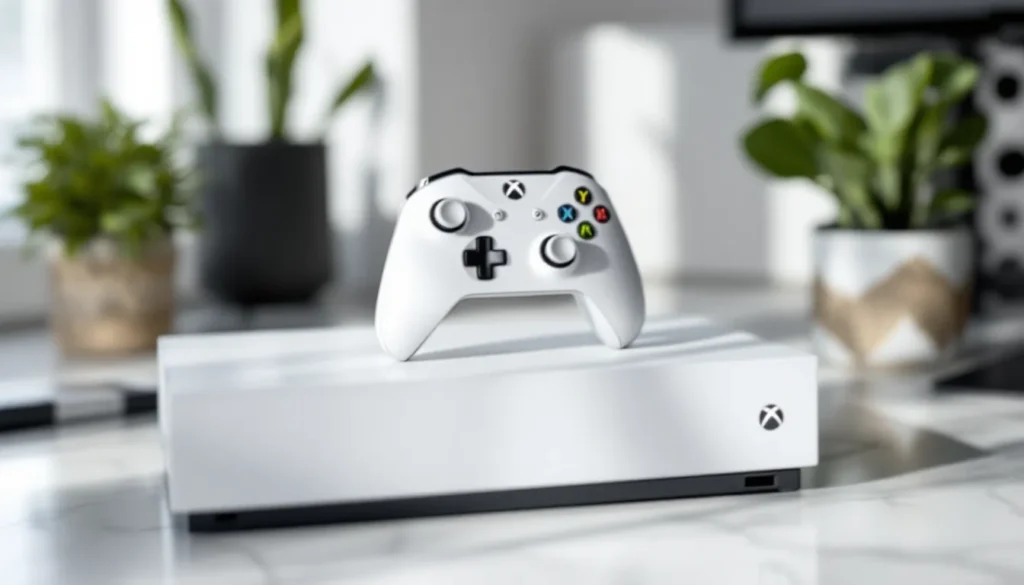
The Xbox One X launched in November 2017 as the industry’s most powerful console at the time, featuring a significantly upgraded GPU (6 TFLOPS vs. the original’s 1.31) and support for actual 4K gaming at 60fps in many titles. This high-end model targeted enthusiasts willing to pay the premium, establishing a two-tier system. Finally, the Xbox One S All-Digital Edition arrived in May 2019, removing the disc drive and positioning digital-only distribution as the future.
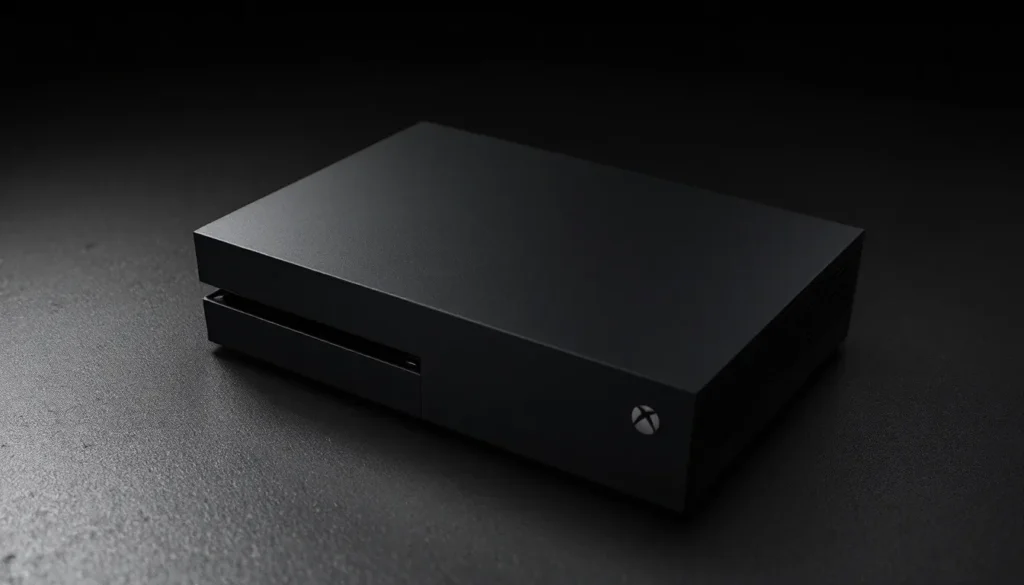
These revisions shaped how consumers perceived the platform. The Xbox One Black guide highlights how variant releases gave consumers options at different price points and feature sets. By the mid-generation refresh cycle, what had started as a controversial launch had evolved into a diverse ecosystem with machines for different use cases, budget-conscious players, 4K enthusiasts, and everything in between.
Xbox Game Pass and Digital Services Impact
If hardware revisions evolved the Xbox One’s capabilities, Xbox Game Pass fundamentally transformed its value proposition. Launched in June 2017, Game Pass offered a Netflix-style subscription to hundreds of Xbox games, initially priced at $9.99 monthly. This service became the Xbox One’s killer feature, differentiating it from PlayStation in ways hardware couldn’t.
Game Pass changed how players interacted with the Xbox One ecosystem. Instead of purchasing individual titles, subscribers could sample a vast library, dramatically lowering the friction for trying new games. Microsoft’s strategy of including day-one first-party releases in Game Pass was unprecedented, new Halo, Forza, and Gears of War games hit the subscription service on launch day, providing immediate value for subscribers.
The service had particular impact on the Refurbished Xbox One X category, as older hardware suddenly represented exceptional value when paired with Game Pass access to hundreds of titles. By the console’s final years, Game Pass had become the most compelling argument for Xbox ownership, overshadowing hardware specifications or exclusive games released in any single season. This transformation showed how services could reshape a console’s perceived value, even years after launch.
The Xbox One’s Impact on Gaming Culture
Influence on Online Gaming and Communities
The Xbox One continued the Xbox 360’s legacy as a hub for online multiplayer gaming. The console’s integration of online services, achievements, and cross-platform play helped shape how modern gaming communities function. When Microsoft eventually embraced cross-platform play (something that felt revolutionary in 2016-2017), it signaled a shift away from platform exclusivity toward player convenience.
The Xbox Live service evolved significantly during the Xbox One’s lifecycle. The introduction of Play Anywhere allowed players to own games on both Xbox and PC with a single purchase, fostering a more integrated gaming ecosystem. This feature created genuine value for players already invested in Microsoft’s Windows ecosystem. Communities on platforms like Discord, Twitter, and Reddit organized around Xbox One games in ways that mirrored how gaming culture had shifted online.
Streaming became a major cultural force during the Xbox One generation, with Twitch and YouTube gaming exploding in viewership. The console’s built-in streaming capabilities and the Mixer streaming platform (which Microsoft acquired) represented the company’s attempt to compete in the creator economy. While Mixer eventually shut down, it demonstrated Xbox’s commitment to supporting gaming culture beyond just hardware sales.
Legacy in the Console Gaming Market
The Xbox One’s legacy is complex and multifaceted. Even though launching into a PR nightmare, the console eventually succeeded commercially and culturally. It survived a rocky first year, pivoted smartly with hardware revisions and service emphasis, and ended its generation strong. The generation shipped over 50 million units worldwide, establishing it as a commercially successful platform even if it never matched PlayStation 4’s dominance.
More importantly, the Xbox One legacy influenced how the industry approaches console design and service integration. Microsoft’s willingness to reverse unpopular decisions (always-online requirements, mandatory Kinect, digital-only distribution) showed that consumer feedback could reshape a platform’s trajectory. The emphasis on backward compatibility, where older Xbox One games remained playable and enhanced on the Series X
|
S, set a precedent other companies now follow.
The console also accelerated the industry’s shift toward subscription services and digital distribution. While not the first or only platform to offer these, the Xbox One’s evolution into a Game Pass-centric ecosystem demonstrated that recurring revenue models could rival or exceed traditional software sales. This transformation rippled across the industry, influencing how PlayStation, Nintendo, and PC gaming platforms developed their service strategies.
When gamers look back at the Xbox One from 2024 onward, they see a console that stumbled, adapted, and eventually found its identity. The November 22, 2013 launch date marks the beginning of a generation that reshaped expectations around console lifecycle management, digital services, and player choice. The Xbox One on Amazon and Xbox One on eBay markets remain active, with used units still providing compelling value for players seeking backward-compatible gaming libraries. The console’s ability to maintain relevance and value years after launch speaks to how well Microsoft adapted to market realities.
Conclusion
The Xbox One released on November 22, 2013, during one of gaming’s most pivotal moments. What started as a controversial launch eventually evolved into a successful generation that proved Microsoft could learn from mistakes, adapt to consumer demands, and compete in an increasingly service-driven gaming landscape. The console’s journey from the Kinect-bundled, always-online skepticism of 2013 to the Game Pass powerhouse of 2020 illustrates how platform management has fundamentally shifted.
Undertanding when the Xbox One released provides context for grasping how modern console ecosystems developed. The decisions made in 2013, and reversed in the years after, shaped industry standards around player choice, backward compatibility, and subscription services. For gamers looking back, the Xbox One represents a generation of experimentation, adaptation, and eventually, success even though initial turbulence. The console’s legacy continues to influence how Microsoft, Sony, and Nintendo approach hardware, services, and community engagement in the current generation.