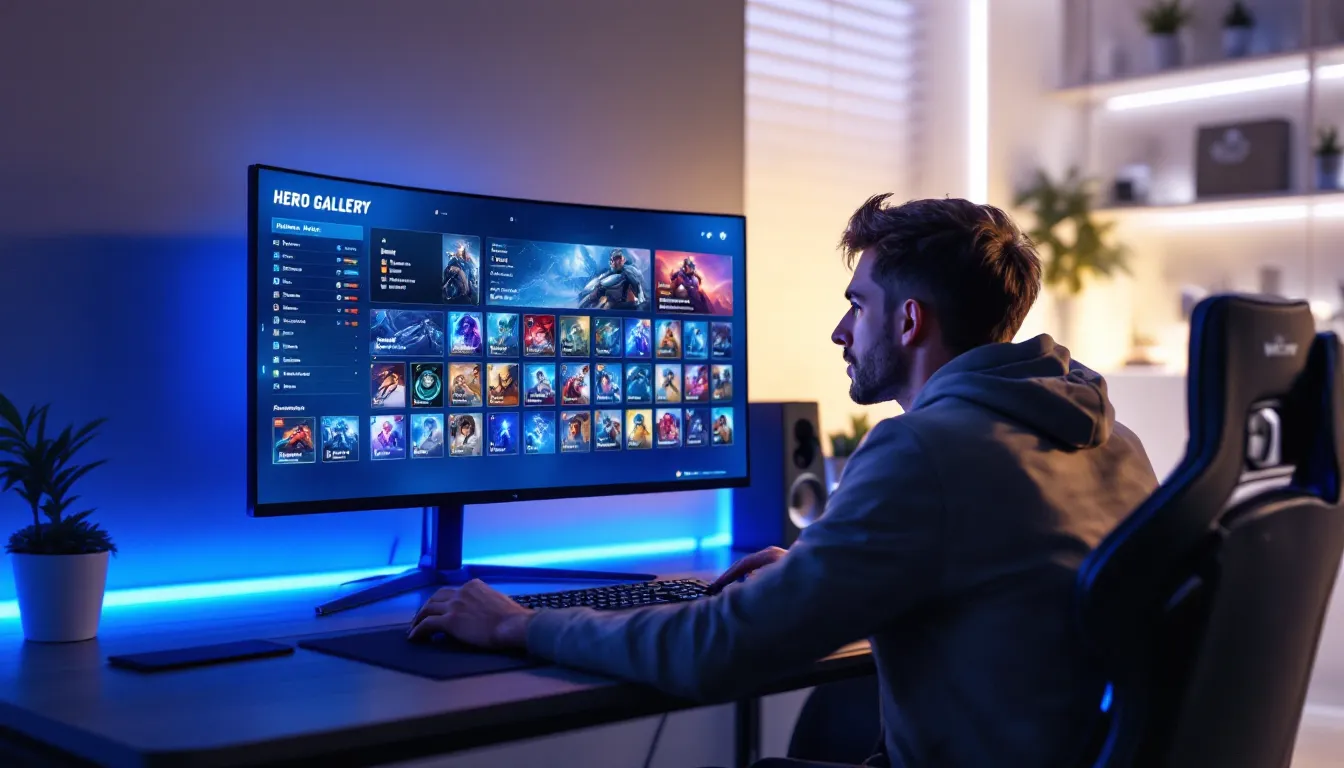

The Overwatch hero gallery is your gateway to understanding the game’s 42+ heroes and finding your next main. Whether you’re jumping into competitive play for the first time or grinding ranked matches, the gallery organizes every character by role, ability, and playstyle. If you’ve felt overwhelmed by the roster or unsure which heroes mesh with your strengths, this guide cuts through the noise. We’ll walk you through navigating the gallery interface, breaking down each role’s standout picks, and most importantly, showing you how to identify which heroes fit your playstyle so you can climb faster and perform better.
Table of Contents
ToggleKey Takeaways
- The Overwatch hero gallery organizes 42+ heroes by role, difficulty, and ability, making it essential for identifying your main and climbing the ranked ladder faster.
- Tank heroes like Reinhardt excel at creating space and absorbing damage, while off-tanks like D.Va and Zarya require mobility and positioning to succeed in different team compositions.
- Damage heroes span hitscan (Soldier: 76, Widowmaker) for precision aim and projectile heroes (Pharah, Genji) for prediction, each demanding different mechanical skill levels and playstyles.
- Support heroes enable teams through healing, utility, and utility-offense hybrids—from passive healers like Mercy to aggressive options like Illari who reward aggressive positioning.
- Finding your main requires honest self-assessment of your preferred playstyle, map knowledge, and mechanical skill level, followed by 30-40 focused competitive matches to validate your choice.
- Build a flexible hero pool of 5 or fewer heroes (one per role) to counter-pick strategically, and prioritize mastery through deliberate practice over spreading yourself thin across too many heroes.
Understanding The Overwatch Hero Gallery Interface
Navigating The Gallery View
The Overwatch hero gallery is built into the client and accessible from the main menu. Once you open it, you’ll see hero cards arranged in a grid layout with essential info displayed at a glance: hero name, role, difficulty rating, and a high-res artwork tile. Click any hero card to open a detailed view showing their abilities, ultimate, health pool, and an animated model you can rotate to inspect skins.
The layout is clean by design. Your selected hero expands into a full-screen panel with ability descriptions. Each ability includes cooldown timers (e.g., Reinhardt’s Charge has a 7-second cooldown) and damage values where applicable. You can preview abilities in action through short video clips, which is genuinely helpful if you’re trying to understand an unfamiliar hero’s kit at a glance.
Navigating between heroes is fluid, arrow buttons let you cycle through the roster without closing the panel. You can also search by typing a hero’s name, which beats scrolling when the roster gets this large. The gallery remembers your recently viewed heroes, so switching between your mains is quick.
Filtering And Sorting Heroes
The filtering system is one of the gallery’s best features. You can sort by role (Tank, Damage, Support), difficulty (Easy, Medium, Hard), or view the entire roster at once. This is invaluable when you’re learning, filtering by “Easy” difficulty immediately pulls up heroes like Soldier: 76 and Mercy, which have straightforward mechanics and high skill floors.
For competitive players, the gallery doesn’t flag the current meta directly, but you can cross-reference patch notes. Blizzard updates abilities and balancing regularly, as of early 2026, several heroes received significant changes affecting their viability. The gallery itself updates instantly when patches drop, so ability descriptions, cooldowns, and damage numbers reflect the live build.
You can also toggle between hero origins to see which characters are new to the roster or recently reworked. This context matters when climbing, new heroes or buffed heroes shift team compositions and win rates. Some players filter by “Most Played” (a community stat) to see what’s dominating ranked currently, though popularity doesn’t always mean it’s right for your rank or playstyle.
Tank Heroes: The Frontline Protectors
Primary Tank Heroes
Tank heroes are your team’s shield wall and space creators. They boast high health pools (400+ typical) and abilities designed to absorb damage or block incoming fire. Reinhardt is the quintessential main tank: his Barrier Field can soak 1600 damage and forces enemies to respect his position. Playing Reinhardt means leading pushes and protecting squishier teammates behind your shield. His weakness? Mobility. Once pinned down, he struggles against mobile heroes like Tracer or Genji.
Sigma brings a different flavor with Kinetic Grasp, which not only blocks incoming projectiles but converts them into personal shields. His playstyle is more reactive than Reinhardt’s, punishing careless enemy positioning with Accretion (his rock ability that stuns). Sigma synergizes well with coordinated teams but requires precise aim and shield timing.
Ramattra (introduced in the post-2022 roster overhaul) fills the aggressive tank role. In Nemesis Form, he transforms into a close-range fighter with reduced cooldowns and increased damage. This gimmick appeals to players who want tank gameplay with DPS-like mechanics. The trade-off? Lower sustained shield value compared to Reinhardt or Sigma.
Each primary tank excels in different scenarios. Reinhardt owns deathball comps (where your whole team groups tightly). Sigma thrives in poke battles at range. Ramattra punishes enemies who get too close. Your role pick should match your team’s overall composition and the enemy’s hero choices.
Off-Tank And Specialist Heroes
Off-tanks are lighter, more mobile counterparts with 200-300 HP and lower defense tools. D.Va is the archetype: she dashes freely, matrix-blocks bursts with her Defense Matrix, and ejects to escape (gaining temporary armor afterward). D.Va counters ability-reliant heroes and is especially strong against ultimate abilities, making her a flex pick in many comps. Her weakness is sustained close-range damage, if she runs out of matrix uptime, she melts fast.
Zarya generates shields around herself and teammates by absorbing incoming damage, converting that absorbed energy into beam damage. She’s unique: the more damage her team takes, the stronger her attack. This invites aggressive playstyles and works beautifully in pokey, mid-range scenarios. But, against burst-heavy enemies, her shields won’t save her if the damage spikes too fast.
Junker Queen is the newest off-tank addition to the roster (released in Season 4, 2022). She wields a massive gun with a melee swing, pulls enemies toward her with Commanding Shout, and can heal through aggression with her passive. She’s mechanically simple but positioning-dependent, get caught out of position and she crumbles. Players familiar with Overwatch Orisa: A Comprehensive Guide understand that positioning defines survival in this game, and Junker Queen is no exception.
Off-tanks require a shift in mindset from main tanks. You’re not holding a choke point with a shield, you’re creating chaos, punishing isolated targets, and enabling your DPS. Your survivability depends on mobility and positioning, not raw bulk.
Damage Heroes: High-Impact Offensive Specialists
Hitscan And Precision Damage Heroes
Hitscan heroes fire instantly and reward mechanical aim. Soldier: 76 is the gold standard: his Heavy Pulse Rifle shoots in perfect hitscan, and his Helix Rockets provide burst damage. His self-heal lets him sustain 1v1 duels, making him beginner-friendly. Soldier works at medium range and is particularly effective against flying heroes (thanks to his hitscan) and stationary targets. His skill ceiling is relatively low compared to other DPS, which is why he’s often recommended to newer players.
Widowmaker is the polar opposite in terms of skill requirement. Her Sniper Rifle demands precise aim and positioning sense. Land headshots, and you’re eliminating threats instantly. Whiff, and you’re vulnerable. The gallery prominently displays her Grappling Hook cooldown (12 seconds) because that’s your only escape, positioning is absolutely critical. Her playstyle rewards dedicated practice. For those interested in cosmetics that match the character, Overwatch Widowmaker Skins: Unlocking the Best Looks.
Cassidy is a mid-range revolver user who also packs a Magnetic Grenade for burst and an Unload ability to fan-fire his gun. He functions as a duelist, excelling in 1v1 scenarios and against grouped enemies. His Deadeye ultimate is a team-wiping tool if enemies bunch up. Cassidy requires good positioning and cooldown management, making him moderately difficult to master.
Tracer uses hitscan dual pistols from close range, relying on her Blink dash to dodge and reposition. She’s high-skill, high-reward: blink in, burst a target, blink out. Miss your shots or overcommit, and you’re dead. Tracer shines against uncoordinated teams but struggles when enemies play together defensively.
Projectile And Area Damage Heroes
Projectile heroes require leading targets and aim predictions. Pharah fires explosive rockets from above, staying mobile and threatening from angles where hitscan heroes struggle to reach her. Her Hover Jets consume fuel, so vertical positioning is a resource management game. Pharah is effective in chaotic teamfights and excels against ground-bound teams, but dedicated hitscan players counter her hard.
Junkrat throws grenades and mines with high splash damage and fast projectile speed. His Rip-Tire ultimate rolls across the map and detonates for massive area damage. He doesn’t require aim in the traditional sense, splash radius forgives some inaccuracy, making him lower-skill mechanically but requiring good positioning and timing sense. Junkrat punishes clustered enemies and controls space effectively.
Hanzo fires arrows that require prediction and positioning. His Sonic Arrow reveals enemies, and his Dragon Strike ultimate is a team-fight closer. Like Widowmaker, he’s mechanically demanding, but his arrows have arcing trajectories compared to hitscan, creating a different skill curve. Players often find Hanzo harder to learn initially but easier to maintain aim with.
Genji is a melee-range projectile user with extreme mobility (dash, double-jump, wall-climb). His Shurikens reward accuracy at close range, and his Deflect ability mirrors incoming projectiles and attacks. Genji is the epitome of high-skill gameplay, mechanical mastery and positioning sense are both mandatory. The learning curve is steep, but mastered Genji players are menacing in ranked. To understand the broader Overwatch ecosystem, reviewing overwatch heroes and community discussion helps contextualize where Genji fits in the current meta.
Support Heroes: Healing And Utility Masters
Healing And Defensive Support
Support heroes enable their teams through healing and defensive abilities. Mercy is the primary healer: she tethers to a teammate with Guardian Angel, boosting their healing or damage. She’s forgiving for newer players, point-and-click healing, straightforward positioning, no complex abilities. Her weakness? No self-defense mechanism aside from mobility. Mercy requires good awareness and positioning to survive when enemies focus her.
Ana is a hitscan healer with her Hitscan Rifle and Sleep Dart stun. She’s high-skill mechanically but offers insane value when played well, sleep-darting an ultimate-charging enemy can swing teamfights. Her Biotic Grenade heals allies and damages enemies, adding depth to her kit. Ana shines in coordinated play and punishes enemy positioning mistakes.
Lúcio is a healing support with mobility attached. His Sonic Amplifier weapon fires projectiles, his Crossfade switches between healing and speed auras, and his Amp It Up boosts whichever aura is active. His Sound Barrier ultimate gives shields, not healing, making him unique. Lúcio excels in fast-paced, corridor-heavy maps where his speed boost and wallride mobility shine. He’s vulnerable in open areas and against long-range poke damage.
Zenyatta is an off-healer with high damage potential. He damages from range with projectiles, heals teammates at distance with Harmony Orb, and discords enemies with Discord Orb (amplifying damage taken). Zenyatta is immobile but deals serious damage, playing him means good positioning and threat awareness. In the right hands, Zenyatta tilts the damage balance heavily in his team’s favor.
Utility And Offensive Support
Brigitte is a support-tank hybrid. She swings a melee weapon, stuns enemies with Shield Bash, and generates armored shields for nearby teammates. Brigitte is short-range and thrives in brawly teamfights where she can swing freely. She’s low-aim-difficulty but high-positioning-difficulty, misjudge range and you’re overwhelmed.
Moira is an off-healer with offensive pressure. Her Biotic Grasp heals allies or damages enemies in beam form, and her Fade ability lets her escape danger. Her playstyle is flexible, she can pressure enemies or provide healing depending on the situation. Moira’s Coalescence ultimate heals and damages simultaneously, making her valuable in teamfight pivots. She’s beginner-friendly because her mechanics are simple, but good Moira play involves smart resource management and positioning.
Kiriko is a teleporting support with healing ofuda projectiles, teleport escapes, and a Suzu ability that cleanses enemy effects (negating stuns, anti-heal, etc.). She’s mobile, defensive, and useful in coordinated comps. Kiriko requires good decision-making to know when to suzu allies and when to save teleport.
Illari (newest support, released late 2023) brings offensive healing through Solar Beam projectiles that heal on hit. Her Healing Station is a stationary healing zone, and her Captive Sun ultimate marks enemies for burst damage. Illari is unique, she forces aggressive positioning to heal effectively. For competitive players looking to explore healing from different angles, Illari offers a fresh perspective compared to passive healers like Mercy. Understanding her role within the support class can be enhanced by exploring Overwatch Bob: The Ultimate Game-Changer You Need to Master, which discusses how synergy between heroes creates team value.
How To Find Your Main Hero
Assessing Your Playstyle And Preferences
Finding your main starts with honest self-assessment. Ask yourself: do you prefer positioning safety (back-line), aggressive engagement (front-line), or flexibility (off-tank, off-support)? Do you want high mechanical difficulty (rewarding precision) or straightforward abilities (lower ceiling, easier to pilot)? Are you a patient, positioning-focused player, or do you prefer fast-paced, reaction-based gameplay?
Map knowledge matters too. Some heroes thrive on specific maps. Widowmaker owns sightline-heavy maps: Junkrat controls tight corridors: Lúcio dominates maps with wallride opportunities. Before committing to a main, play 10-15 matches on each map to see which heroes feel natural in those spaces.
Watch pro play and streamers. Competitive Overwatch on platforms like IGN and esports broadcasts show how top players leverage specific heroes. Seeing a pro Zenyatta player position and discus enemies is educational, you’ll understand spacing and ult economy at high level. Twitch streams are goldmines for learning hero mechanics in real-time.
Don’t confuse “fun to watch” with “fun to play.” Tracer looks flashy in highlights but requires exhausting mechanical focus for most players. Soldier: 76 seems boring but enables you to focus on macro play and positioning instead of twitch mechanics. Your main should align with what you enjoy practicing, not just what looks cool.
Comparing Hero Abilities And Strengths
Use the gallery’s ability comparisons to understand matchups. Check cooldowns, damage numbers, and ultimate charge rates. Reinhardt’s Charge (7-second cooldown) vs. D.Va’s Boosters (5-second cooldown), the latter resets on enemy hit, making her more forgiving if you miss. These details matter in clutch scenarios.
Analyze what each hero does well: Is it burst damage? Sustained healing? Area control? If you love enabling teammates, support is your lane. If you get satisfaction from eliminating threats solo, DPS is the fit. Tanks reward players who enjoy creating space and absorbing punishment, literally and mentally.
Examine the hero’s “hardest” matchups in the gallery descriptions (not directly stated, but you infer from ability overlap). Widowmaker struggles against Winston (he leaps close, shields with bubbles, she can’t hitscan cleanly). Genji melts to Moira (her beam auto-aims, his reflect can’t save him consistently). These counter-relationships shape your pick strategy.
Trialling heroes in Quickplay or Practice Range first is essential. Spending 30 minutes in Practice Range learning cooldown timings and ability ranges beats jumping into Competitive blind. The gallery provides full ability descriptions, but muscle memory only comes from practice. Once you’ve narrowed it to 2-3 heroes, commit 30-40 matches to each in Competitive to see your actual performance and rank impact. That data is more honest than any guide. Resources like The Loadout offer detailed FPS hero breakdowns and tier lists that can inform your decision further.
Many successful players main one hero per role, creating a flexible pool. For instance: Reinhardt for Tank, Tracer for Damage, Mercy for Support. This covers most scenarios while keeping your champion pool manageable. Mastery beats breadth, you’ll rank faster grinding one hero than trying to learn six. As a bonus, opponents learn your habits, allowing you to counter-pick strategically once you understand your main’s matchup spread.
Tips For Mastering Multiple Heroes
Building A Flexible Hero Pool
Once you’ve found your main, building a secondary or tertiary hero ensures you’re not dead-weight when your main gets countered. The ideal flexible pool includes one hero per role: Tank, Damage, Support. This way, if the enemy hard-counters your main, you have a Plan B that doesn’t sacrifice flexibility.
When selecting secondaries, pick heroes with ability overlap to your main. If Reinhardt is your main tank, learning Sigma next makes sense, both protect teammates but with different mechanics, teaching you positioning and shield timing. If Tracer is your main DPS, learning Genji expands your mobility toolkit without sacrificing aggression.
Avoid trying to master too many heroes simultaneously. Five heroes is reasonable: ten is chaos. Your brain needs focused practice to internalize cooldown timings, ability synergies, and matchup knowledge. Mastery requires reps, and reps are limited. Prioritize depth over breadth.
Consider team comp synergies, not just personal preference. Some heroes naturally combo, Ana’s Discord Orb amplifies any DPS burst, making her valuable with Cassidy or Pharah. Lúcio’s Speed Boost helps Reinhardt close gaps faster. Learning these synergies elevates your teamfighting and win rate more than mechanical perfection on your main ever will.
Watch how GamesRadar+ analyzes meta shifts. When balance patches hit, some heroes rise and others fall. If your secondary suddenly becomes meta, you’re prepared to play it without grinding from zero. Flexibility wins tournaments and climbs ranks faster than stubborn one-tricking.
Practice Strategies And Progression
Structured practice beats mindless grinding. Allocate your practice sessions: 10 minutes warm-up in Practice Range (working on aim or mechanics), 20-30 minutes focused Competitive play on specific scenarios (team fights on particular maps, 1v1 duels with certain matchups), and 10 minutes review (watching your deaths, identifying mistakes).
For mechanical heroes like Widowmaker or Genji, spend time in Practice Range daily. Flick training, tracking, and crosshair placement improve measurably with consistent drilling. For positional heroes like Lúcio or Zenyatta, Quickplay offers better practice because you see real scenarios instead of bots.
Record your matches or watch replays. Blizzard’s replay system shows your perspective and enemy perspectives, review them after losses to see what you missed. Did you face-check a corner? Did you waste your ultimate? Did you misposition relative to your team? Honest self-critique is brutal but accelerates improvement.
Climb steadily, not frantically. If you’re placing in Gold, grinding to Platinum takes 50-100 matches, not two sessions. Each match teaches something. Expect plateaus, you’ll hit SR ceilings where you stall for 10-20 matches, learning new concepts before breaking through.
Finding inspiration from pro play and community resources accelerates learning. Watching Rascal Overwatch: Unleashing Chaos and Charm in Every Match alongside pro-level content shows how top players think about position and ability usage. Community discussion on Overwatch Archives – Fbcorse provides meta breakdowns and hero tier lists that contextualize where your mains fit in the current competitive landscape.
Join a team or stack with consistent teammates. Ranked solo queue is rough because you’re relying on randoms. Five-stacking with a committed group lets you drill team compositions and synergies, accelerating improvement tenfold compared to solo climbing. You’ll also understand callouts and positioning from your teammates’ perspectives, deepening your game sense.
Conclusion
The Overwatch hero gallery is far more than a roster view, it’s a learning tool that organizes 42+ heroes into roles, ability sets, and difficulty tiers. Whether you’re picking your first main or building a flexible pool, the gallery’s filtering and detailed ability descriptions make informed decisions straightforward. Your path forward depends on honest assessment of your playstyle, willingness to practice deliberately, and commitment to mastering one or two heroes before spreading yourself thin. The journey from hero selection to rank climbing is personal, but the fundamentals remain: find your main, understand your matchups, practice intentionally, and adapt your secondary picks to cover weaknesses. With the right mindset and structure, you’ll not only find your main, you’ll climb ranks and enjoy the game far more than if you were endlessly experimenting without direction.