
The hero roster has always been Overwatch‘s heartbeat. Every new character arrival reshapes the meta, forces teams to rethink compositions, and gives players fresh mechanics to master. 2026 brought several exciting additions that have already left their mark on both casual and competitive play. Whether you’re climbing ranked, grinding for a specific hero, or just curious about what’s changed, understanding the new heroes and how they fit into the game is essential. This guide covers everything from their abilities and role distribution to their impact on the competitive scene and what makes them tick in actual matches.
Table of Contents
ToggleKey Takeaways
- Overwatch’s three new heroes in 2026—Silencer, Recon, and Fortify—each introduce distinct mechanics that reshape team composition and force meta evolution across casual and competitive play.
- Silencer excels at disrupting ability-reliant heroes with precision-based ability denial, Recon specializes in information gathering through advanced scouting mechanics, and Fortify controls space through aggressive anchor positioning and armor-plate generation.
- New hero design prioritizes counterplay and specialization over raw stats, with Blizzard using extensive playtesting and data-driven balance patches to keep heroes viable without dominating the meta for extended periods.
- Professional teams adopted new heroes at different rates: Silencer saw immediate 85% match presence within two weeks, Recon required skill development and reached 60% adoption by week four, while Fortify achieved 70% adoption within one week.
- Learning new heroes requires understanding role identity before mechanics—spend time in Practice Range and Quick Play, watch professional matches to understand optimal positioning, and master one hero per gaming session to build consistent muscle memory.
- The meta shifted into a rock-paper-scissors balance where Silencer denies abilities, shields counter Silencer, and Fortify breaks shield stacks, creating three-way competitive depth that rewards teams studying the evolving metagame closely.
The Evolution Of Overwatch’s Hero Roster
Overwatch launched in 2016 with 21 heroes split across three roles: Tank, Damage, and Support. Since then, the roster has grown strategically, each hero adding new dimensions to team play and strategy. Early heroes like Reinhardt and Soldier: 76 defined core playstyles, but newer additions began experimenting with unusual mechanics, ultimates that rewarded positioning, abilities that blurred role boundaries, and kits designed specifically to counter dominant meta picks.
The philosophy behind hero design has shifted. Early heroes were relatively straightforward: Mercy heals, Widowmaker snipes, Reinhardt blocks. By 2024 and 2025, designers had started building heroes with counterplay baked in, heroes whose strength came from specific scenarios rather than raw stats. This evolution prepared the ground for 2026’s releases, which lean hard into specialization and niche utility.
Role distribution has become increasingly important. For years, Overwatch struggled with Tank and Support queue times while Damage dominated. New hero releases now consider role balance. When a new Tank drops, it’s not just about adding another brawler, it’s about filling a specific tactical need. The same applies to Supports, where new heroes either provide unique utility or fill a gap in the existing toolset.
Blizzard has also become more transparent about design intent. When Junker Queen launched in 2022, developers explained her role in the meta explicitly: a close-range brawler who punished positioning mistakes. This clarity helps players understand where new heroes fit and why Blizzard chose their specific abilities.
How Blizzard Designs New Characters
Hero design at Blizzard follows a structured process that balances creative freedom with competitive integrity. It starts with identifying a gap: maybe Tank players need a more mobile option, or Supports need a character who excels at long-range healing. Designers sketch out the core fantasy, what does this hero feel like to play?, before touching mechanics.
Once the fantasy is locked, abilities get workshopped. Designers build prototypes in-engine, testing numbers like damage values, cooldown durations, and projectile speeds. This is where the real work happens. A Support hero’s healing output might be tuned to 5 HP/second for weeks, then bumped to 6.5, then dialed back to 5.8 based on testing data. Every tenth matters.
Playtest feedback drives iteration. Blizzard invites professional players, content creators, and regular gamers into private test realms to play unfinished heroes. Their feedback reveals what works in theory but feels bad in practice, what’s too strong or too weak, and whether a hero actually fills the intended niche. A hero might be “balanced” on paper but oppressive in real matches, leading to reworks.
The competitive window comes next. As a new hero approaches launch, Blizzard closely monitors professional scrims and ranked ladder data. If a hero is overturned, nerfs come fast, sometimes before official release. If underpowered, buffs follow. Unlike cosmetics or skins, hero balance directly impacts game health, so Blizzard takes this phase seriously.
Post-launch support is continuous. Heroes get adjusted in monthly or bi-weekly patches based on win rates, pick rates, and player feedback. A hero who sits at a 58% win rate across all ranks will be nerfed: one at 47% gets buffed. This data-driven approach keeps the roster fresh and prevents any single hero from dominating for too long.
2026 New Heroes: Complete Breakdown
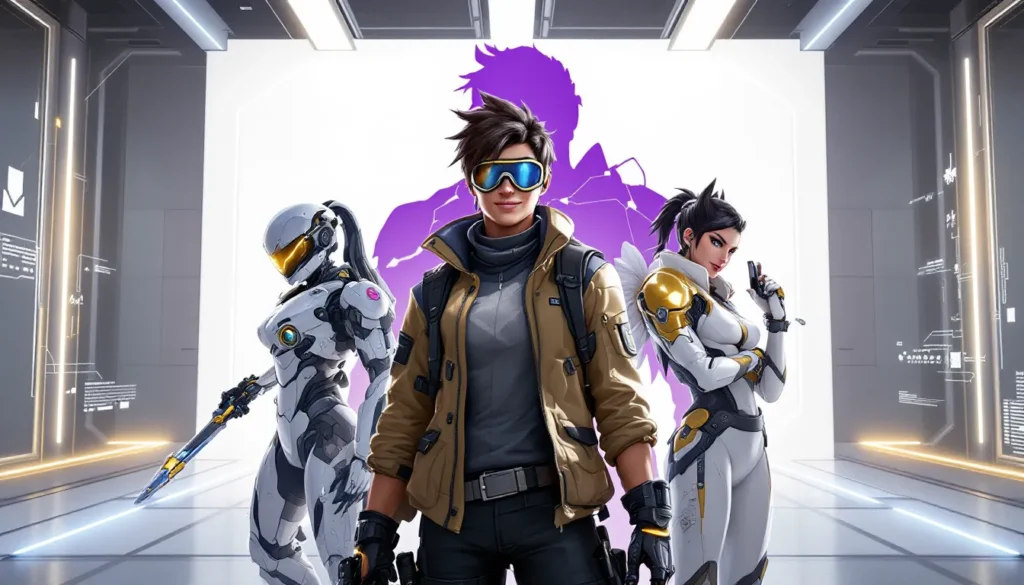
2026 delivered three new heroes: two damage heroes and one tank. This distribution reflects Blizzard’s effort to keep queue times balanced while adding firepower and tankline diversity. Each hero brings distinct mechanics that challenge existing playstyles.
Role Distribution And Team Composition Impact
The addition of these new heroes shifted team composition meta significantly. Historically, Overwatch comps have revolved around “protect the backline” or “dive and burst.” The new Damage heroes introduced a third archetype: controlled area denial with high skill caps. The new Tank brought mobile, aggressive frontline play into conversations dominated by Reinhardt and D.Va matchups.
Role queue has always pressured team composition. Adding Damage heroes increases waiting times for Damage players, while Tank additions don’t create the same imbalance. 2026’s new Tank helps alleviate this slightly. Teams now have more viable Tank duos, reducing mirror matches and opening new synergies.
Composition flexibility increased measurably. Before these releases, certain lineups were considered mandatory at high ranks. The new heroes forced teams to prepare multiple strategies. A team that relied solely on Rein-hammer pressure now faces a matchup-dependent game. Do they stick with Rein, swap to the new Tank, or flex around it entirely? This decision-making depth is exactly what Blizzard aimed for.
Hero Abilities And Gameplay Mechanics
The first new Damage hero, Silencer, operates on a unique ammo system. Unlike traditional Overwatch heroes with cooldown-based abilities, Silencer regenerates ammunition. Her primary fire is a precision rifle with 15 rounds per magazine, reloading automatically after 8 seconds of inactivity. Her Disruption Shot (right-click) costs 3 ammo and temporarily disables enemy abilities, not a full stun, but a hard interrupt that lasts 0.5 seconds. Ultimate charge builds from damage dealt, and her Signal Blackout ultimate silences all enemies in a 20-meter radius for 4 seconds.
This kit demands accuracy. Silencer thrives against ability-heavy teams: she can interrupt Genji dashes, Tracer blinks, and most ultimates with precise timing. Her weakness is obvious, no mobility, no defensive tools. She relies entirely on positioning and teammates for protection.
The second Damage hero, Recon, uses a transformation mechanic. He switches between two modes: Scout mode offers high movement speed and rapid-fire hitscan damage (24 DPS per shot), while Analyst mode trades mobility for a long-range scoped weapon with 65 DPS per shot. Switching modes costs 1.5 seconds and triggers a global cooldown on both weapons. His ability Tactical Pulse creates a temporary vision cone, revealing enemies through walls for 3 seconds. Ultimate Dimensional Shift teleports him to any location he’s scouted in the last 30 seconds and grants brief invisibility (1.5 seconds).
Recon rewards game knowledge. Players who understand map layouts and enemy positioning gain massive value from his scouting. He’s a duelist with built-in escape potential, making him slippery and difficult to pin down.
The new Tank, Bastion 2.0 (official name: Fortify), redesigns tanking entirely. Instead of shields, Fortify builds Armor Plates through successful ability hits. His primary weapon is a short-range hammer with 65 damage per swing. Ability Anchor Down roots him in place for up to 4 seconds, during which he gains 50% damage reduction and 1 plate per hit (max 5). Releasing the anchor early refunds remaining duration. Ultimate Phalanx deploys a wall of energy that blocks projectiles and grants +50 damage to teammates shooting through it for 6 seconds.
Fortify is an aggressive tank who controls space through positioning, not shields. He punishes teams that clump together while rewarding teams that stay mobile and use his wall. He struggles against burst damage and long-range poke but excels in corridor maps where his anchor point becomes a moving fortress.
Each new hero deliberately counters something: Silencer shuts down ability-spam comps, Recon beats stationary shields with his scouting, and Fortify dominates resource-depleted teams and choke points.
Early Meta Shifts And Competitive Viability
Professional teams adapted quickly to the new heroes. Silencer found immediate use as a meta counter in tournaments. Teams running Genji or Tracer-heavy compositions faced Silencer picks that hard-countered their entire strategy. Within two weeks of competitive play, Silencer was banned or prioritized in nearly every match. This forced meta evolution: teams either played around Silencer or stopped relying on ability-heavy DPS.
Recon’s adoption was slower. His high skill ceiling meant casual players struggled, but professional players recognized his potential. In scrims and official matches, Recon played a niche role: information gatherer on open maps like Busan and Circuit Royal. His ultimate proved clutch for objective holds and rotation plays. By the end of March 2026, Recon appeared in roughly 30% of professional matches, trending upward.
Fortify’s viability hinged on team coordination. Solo queue players couldn’t capitalize on his wall ultimate or his aggressive anchor playstyle. Professional teams, but, built entire compositions around him. Double shield became possible again with Fortify’s energy wall, and aggressive Tank-DPS duos leveraged his anchor point as a staging ground. Teams using Fortify showed a 52% win rate in professional play by mid-2026.
Balance patches came quickly. Silencer’s Disruption Shot cooldown was increased from 4 seconds to 5 seconds due to her overwhelming pick rate. Recon received a minor scout duration buff (from 3 to 4 seconds) to improve his viability at lower ranks. Fortify’s armor plate generation slowed slightly, making him less oppressive in chaotic teamfights. These adjustments kept the meta dynamic and prevented any single hero from dominating.
Getting Started With New Heroes
Learning new heroes is about understanding their identity first, mechanics second. Each of 2026’s additions plays fundamentally differently from existing heroes, so past experience only goes so far.
Training Tips For Mastering New Characters
Start in Practice Range. Spend 15 minutes alone with each hero. Understand their attack patterns, ability ranges, and audio cues. For Silencer, practice flick shots on moving dummies. For Recon, drill mode-switching between close and long range. For Fortify, test how long your anchor can survive different damage scenarios.
Play in QP Before Ranked. Quick Play is lower stakes and teaches map-specific knowledge. You’ll discover where Silencer positions work best, which routes Recon scouts reveal, and how Fortify’s anchor controls chokes. Play 10 QP matches per new hero before touching ranked. You’ll improve faster and avoid throwing games.
Understand Your Role Deeply. Silencer and Recon are Damage heroes but operate differently from Tracer, Soldier, or Widowmaker. Don’t autopilot past mechanical skills into your new character. Silencer requires exceptional positioning awareness: she has no mobility. Recon requires map knowledge: scouts are only valuable if you know what you’re scouting. Fortify demands focus on anchor placement and timing, not reckless rushing.
Watch Professional Matches. Professional players showcase optimal playstyles. Professional matches on TheLoadout demonstrate advanced Recon scouting routes and Fortify wall placements. Seeing how pros use new heroes shortcuts your learning curve by months. Copy their positioning, not just their mechanics.
Pick One Hero Per Session. Don’t juggle all three in one night. Dedicate sessions to individual heroes so your brain builds consistent muscle memory and game sense.
Best Team Compositions Featuring New Heroes
Silencer-Focused Comp: Silencer + Ashe/Widowmaker + Mercy + D.Va + Zenyatta. This composition clusters around Silencer’s ability denials. Mercy pockets the primary Damage dealer while Zenyatta discords targets before Silencer disrupts. D.Va dives threats after Silencer disables them. Win condition: shut down enemy abilities and burst targets in windows where they’re vulnerable.
Recon Scout Comp: Recon + Soldier: 76 + Lúcio + Sigma + Ana. Recon provides vision that Soldier capitalizes on. Lúcio’s speed and Ana’s sleep protect Recon during scouting. Sigma’s shield creates safety, and Recon’s scouting refunds positioning risks. Win condition: gather superior information and trade kills through knowledge advantages.
Fortify Anchor Comp: Fortify + Genji + Moira + Mercy + Tracer. Genji and Tracer dive around Fortify’s anchor, creating a two-pronged offensive. Moira keeps Fortify and divers alive while dealing respect damage. Mercy pockets whoever’s winning trades. Win condition: control a critical point with Fortify’s anchor, use it as a base for coordinated dives, and heal through damage.
Mixed Flexibility Comp: You don’t always need compositions built specifically around new heroes. Silencer slots into any team needing ability denial. Recon works in dive or poke compositions. Fortify pairs with most standard Tank/DPS/Support lineups. Flexibility matters, pick new heroes based on enemy composition, not only based on prepared comps.
Counters And Strategic Matchups
New heroes don’t exist in a vacuum. They’re strong into certain matchups and weak into others. Understanding these relationships is crucial for climbing and adapting in real time.
Silencer excels against ability-reliant heroes but struggles into shield-heavy compositions. She counters Genji, Tracer, Echo, and Sombra, anyone whose playmaking depends on abilities. Against D.Va, Sigma, or Reinhardt, Silencer becomes a mediocre hitscan with less effective ability denial. Teams facing Silencer often respond by stacking shields, which removes her disruption utility entirely.
Recon beats stationary heroes and players who position predictably. He shreds Widowmaker in sniper duels thanks to scout information. Against mobile heroes like Tracer, he struggles to land shots during mode transitions. Mei, Roadhog, and other close-range heroes hard-counter him. His long scope cooldown (1.5 seconds) punishes missed shots against nimble targets.
Fortify dominates chokepoint maps and tight teamfights but feels vulnerable on open maps where anchor placement becomes risky. He loses to coordinated poke damage, teams spamming projectiles from range whittle down his armor plates faster than he generates them. Long-range hitscans like Widowmaker and Soldier: 76 pressure Fortify from distances where his hammer can’t respond.
How New Heroes Compare To Classic Characters
Silencer fills a niche that no existing hero dominated completely. She’s closest to Widowmaker (precision, positioning-dependent) but plays entirely differently due to her ability disruption focus. Compared to Widowmaker’s one-shot pressure, Silencer relies on ability denial and sustained pressure.
Recon versus Soldier: 76: Soldier is consistent and reliable: Recon trades consistency for high upside. Recon’s scouting and invisibility ultimate outvalue Soldier’s visor in information-heavy games, but Soldier’s simplicity makes him more forgiving in chaotic matches.
Fortify versus Reinhardt: Reinhardt excels at blocking damage: Fortify excels at controlling space. Rein is simpler to play: Fortify demands better positioning. In professional play, teams favor Fortify into ability-denial or coordinated compositions, while Rein remains the standard pick for raw survivability and shatter utility.
Integrating new heroes into existing matchups shifts the metagame subtly. Teams that previously locked in specific heroes now consider these newcomers as strategic alternatives. The old meta wasn’t “wrong”, it just evolved.
The Impact On Ranked Play And Competitive Scene
New heroes always shake ranked play. Players experiment, testers figure out optimal builds, and the ladder eventually stabilizes around new norms. 2026’s releases did exactly that, but with interesting ripples.
In the first two weeks post-launch, Silencer boasted a 54% win rate across all ranks. One-trick climbers abused her disruption potential. By week four, after the cooldown nerf, she settled into a healthy 50-51% range. Her presence forced teams to draft around her, creating counter-pick dynamics that didn’t exist before.
Recon’s ranked performance mirrored his professional trajectory: slow adoption that accelerated over time. His first-week win rate hovered at 47%, discouraging casual pickups. But by week six, players figured out his scouting routes and gameflow, and his win rate climbed to 51%. High-rank play (Diamond+) saw earlier adoption than lower ranks, suggesting his skill ceiling is steep.
Fortify had the smoothest integration. His 50-51% win rate appeared immediately and remained stable. Teams understood how to build around him because his role, Tank, has established conventions. Support players knew how to position behind him: DPS players grasped the anchor-point playstyle. This consistency made Fortify feel immediately viable without being oppressive.
Queue times shifted slightly. Damage queue times increased by 12-15% in the first month (new Damage heroes spike interest), while Tank and Support queues remained stable. By month two, Damage queue times normalized as hype diminished and players diversified back to existing heroes.
Professional Player Perspectives And Adoption Rates
Top-500 players adapted differently to each hero. Pro Tank players immediately grasped Fortify’s strengths and weaknesses through scrims. Teams like Dallas Fuel and Los Angeles Valiant began experimenting with Fortify-centric compositions within the first week.
Professional Damage players took longer with Recon. His abstract scouting mechanic required map-specific knowledge that casual experience couldn’t teach. Teams hired coaches to analyze optimal scouting routes. By the time official competition started, Recon became a staple pick, but adoption was deliberate rather than instinctive.
Silencer received immediate respect from professional players. Her ability denial fit perfectly into the structured, coordinate-heavy playstyles of organized teams. Teams recognized her as a meta-breaking pick within days. Tournament organizers began discussing preseason bans before she was officially released to competitive.
Professional adoption rates:
- Silencer: 85% of matches within two weeks (presence even though bans)
- Recon: 30% of matches within two weeks, 60% by week four
- Fortify: 70% of matches within one week
These numbers reflect how pros valued each hero. Fortify was immediately viable: Recon required learning: Silencer was too strong to ignore. According to Game Informer’s coverage, several teams credited their early Silencer mastery as a major factor in playoff success. Teams that adapted quickly to Silencer’s disruption mechanics won more matches early in the season.
Balance patches kept professional play dynamic. When Silencer’s cooldown increased, her impact diminished just enough to open space for other compositions. When Recon received scouting buffs, professional teams doubled down on scout-focused strats. Fortify never received major changes, suggesting Blizzard nailed his tuning on first iteration.
Competitive meta evolved monthly:
- Month 1 (Post-Launch): Silencer-spam era. Teams pick Silencer, face Silencer, and adapt by stacking shields.
- Month 2: Shield-heavy meta (Sigma, Reinhardt) becomes meta-oppressive. Recon adoption increases to break shields.
- Month 3: Fortify comps counter shield stacks, creating a three-way meta balance: Silencer denies abilities, shields counter Silencer, Fortify breaks shields.
This rock-paper-scissors dynamic kept competition fresh and rewarded teams that studied the evolving meta closely.
Future Hero Releases And Development Roadmap
Blizzard’s roadmap for future Overwatch releases remains partially under wraps, but developer commentary provides clues. The company has publicly stated that 2026 was a “hero-heavy” year, three releases instead of the typical two. This suggests 2027 might slow down hero releases while focusing on balance patches and quality-of-life improvements.
Talk of upcoming heroes centers on two gaps: role-specific needs and archetype expansion. Support players have consistently requested heroes offering unique value without feeling mandatory. One rumored support hero focuses on preventative healing, shields and barriers applied before damage happens, rather than reactive healing. This archetype would differentiate from Mercy, Lúcio, and Ana while filling a gameplay niche.
Damage hero rumors mention a “summoner” character who deploys minions or NPCs that fight alongside her. This would introduce tower-defense mechanics into Overwatch, requiring new balancing frameworks. Professional players worry about the competitive implications of AI-controlled characters, but Blizzard’s designers seem committed to exploring it.
What To Expect Next In Overwatch’s Evolution
Hero releases will increasingly prioritize competitive integrity. Blizzard learned from past mistakes, heroes released overpowered created negative player experiences, and now invests heavily in playtesting and balance iteration before launch. Expect future heroes to hit the ground at 48-52% win rates, with gradual adjustments based on real data.
Mechanical complexity will likely increase. Early Overwatch heroes used straightforward mechanics: click to shoot, press Q for ultimate. Modern heroes require sophisticated gameplay (Silencer’s ability disruption timing, Recon’s mode-switching strategy). This trend will continue as players demand depth and professional-level play demands counterplay.
Roles may continue to blur. Blizzard has hinted at “flexible” heroes who can flex between two roles situationally. Imagine a character who’s primarily Support but can switch to Tank mode for 8 seconds. This would require role-queue rework, but it opens creative possibilities and solves queue-time problems organically.
The esports competitive scene reported on VGC will increasingly influence hero design. Blizzard watches professional matches and ladder statistics equally. If a hero dominates ranked but flops competitively (or vice versa), redesign discussions happen quickly. Professional players will likely have even more direct input on future heroes through organized feedback channels.
Crossovers and licensed heroes may expand. Overwatch 2’s partnership with K-pop stars and other franchises shows Blizzard’s openness to creative skins. Hypothetically, future “heroes” could be licensed characters reskinned with new mechanics. This is speculation, but it aligns with current monetization and brand-partnership strategies.
The Overwatch community continues to leak upcoming content, and leaks often prove semi-accurate. Datamined code suggests heroes in development focus on utility and teamplay synergies rather than raw mechanical skill. This positions future hero design toward team-oriented gameplay, rewarding communication and coordination.
Patch cycles will remain monthly or bi-weekly. Balance changes won’t slow, if anything, Blizzard will iterate faster on new heroes to maintain meta health. Expect heroes to see meaningful adjustments within 4-6 weeks of launch as the meta stabilizes and Blizzard fine-tunes numbers.
Conclusion
2026’s new heroes, Silencer, Recon, and Fortify, represent Overwatch’s commitment to mechanical depth and strategic diversity. Each arrived with distinct identities, clear strengths and weaknesses, and genuine impact on the competitive landscape. Silencer disrupts ability-heavy comps, Recon gathers game-winning information, and Fortify controls space through aggressive anchoring.
Learning these heroes isn’t just about grinding them to high ranks. It’s about understanding the game’s evolution. Blizzard’s design philosophy has matured beyond simple number tuning into archetypal expansion. Heroes now fill niches that didn’t exist two years ago.
Your path forward depends on your goals. Climbers should learn Fortify as a flexible Tank capable of fitting multiple compositions. Information players should practice Recon’s scouting mechanics and map knowledge. Players seeking disruption and outplay potential should invest in Silencer’s precision timing. Try all three in Quick Play before committing to ranked, each demands different skills and game sense.
The meta will continue shifting as patches adjust hero numbers and professional teams discover new compositions. Staying updated through patch notes and professional matches gives you a constant edge. New heroes represent opportunities, not problems. Use them, or counter them. Either way, Overwatch’s hero roster is deeper and more dynamic than ever.